The JournalOwnership
Monsoon Protocol
Four months of standing water, and what they ask of an electric scooter.
The first question every prospective owner in Gujarat asks, in some form: what happens when it floods?
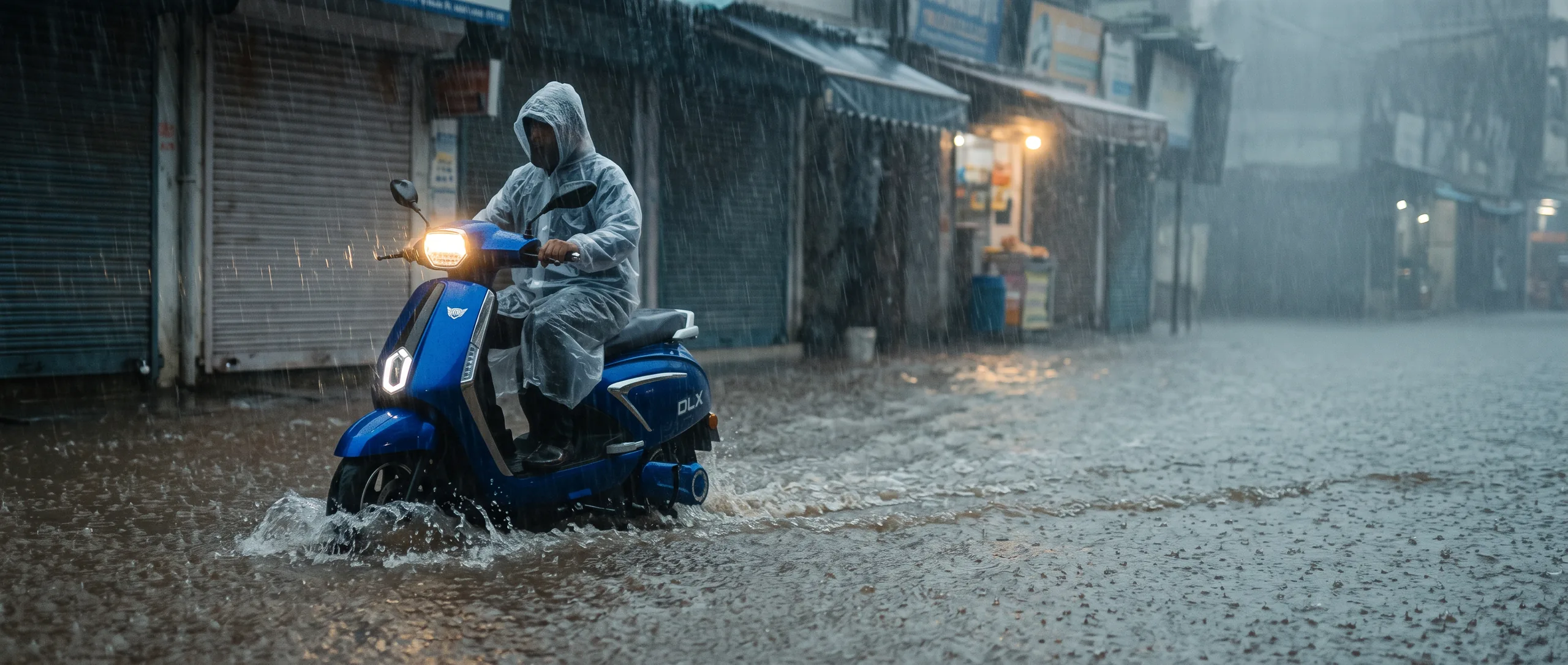
The honest answer has two halves. The vehicle is built to be rained on, ridden through wet roads and parked outside in a downpour. It is not a boat, and neither is anything else with wheels.
What the design already handles
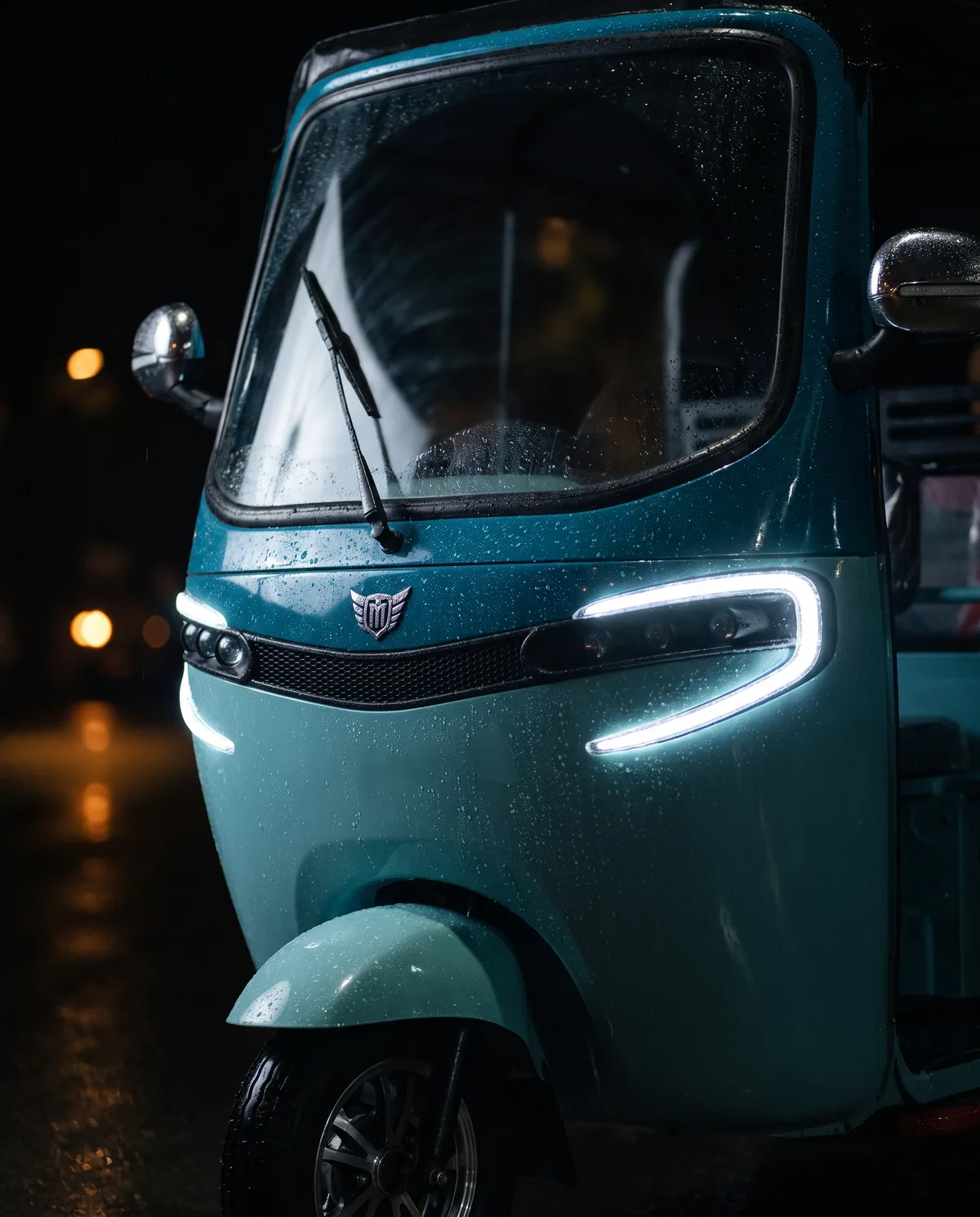
The pack and its electronics are sealed units — the DLX GOLD's battery is specified water-proof, not merely water-resistant. The lighting is fully LED and sealed. The brakes are 240 millimetre discs at both ends, and a disc is the easier of the two to live with in a wet season: water clears off an exposed face in a couple of rotations instead of sitting inside a drum, and there is nothing enclosed to trap grit that a monsoon road has lifted.
Riding through standing water is not the risk. Not knowing how deep it is, is the risk.
The protocol
- Do not ride into water you cannot see the bottom of. Depth is the only variable that matters.
- If you must cross, go slow and steady and do not stop mid-way. A bow wave in front of the wheel is your friend.
- After a deep crossing, dry the discs with two or three gentle drags before you need them properly.
- Never charge a wet vehicle. Wipe the charging port and the surrounding panel and let it stand before plugging in.
- Park facing out and on the centre stand where you can. Standing water at the rear is worse than at the front.
After the season
Rinse the underside with low-pressure water — a bucket, not a jet. High-pressure washing forces water past seals that were designed for rain falling on them, not for a lance held six inches away. Check the tyres: 90/90-12 tubeless will pick up debris that monsoon roads bring to the surface, and a slow leak is easier to catch in a service bay than on a highway.