The JournalCompany
What Comes Next
Three concepts — CYCLONE, TANQ and ROVER — and what they say about where the range is going.
Everything else in this journal is a vehicle you can buy today, quoted from the sheet it was built to. This piece is the opposite: three concepts, no specifications, and an argument about direction.
A concept is not a promise. Nothing here has a final figure attached to it, and we are not going to invent one — when these become products they will arrive with the same measured numbers as everything else we make. What a concept does say is what a company is interested in, and these three say it clearly enough.
ROVER — the one that matters most
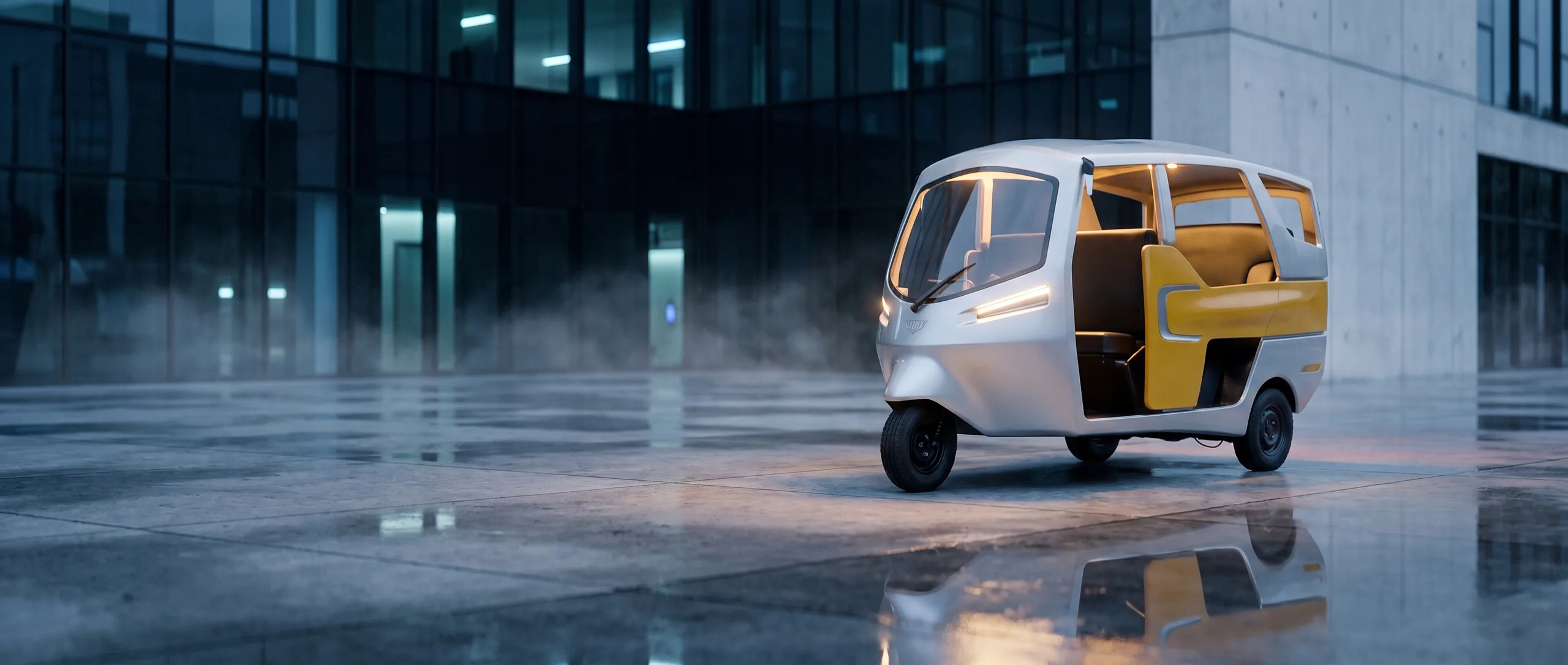
Of the three, the ROVER is the one closest to the work we already do. It is an enclosed electric three-wheeler: a fully bodied cab with proper doors, a deep curved windscreen and a smooth continuous shell, in place of the open canvas-hooded architecture the LIMOSA and the TEJASHVI use today.
That is a real answer to a real complaint. An open three-wheeler is hot, loud and wet in the monsoon, and the driver spends eleven hours a day in it. Enclosing the cab changes the job rather than the styling — which, as we argued elsewhere in this journal, is the only reason worth changing anything on a commercial vehicle.
A concept earns its keep when it answers a complaint somebody actually made, not when it looks unlike anything else in the showroom.
TANQ — the case for going off the road
The TANQ is an electric off-roader: short overhangs, heavily flared arches, deep-tread tyres and a stance that is unapologetically tall. Every other vehicle we build is designed around Indian urban surfaces and the compromises they impose — ground clearance, wheel size, sealed drums. The TANQ asks what the same engineering looks like when the road stops being the constraint.
CYCLONE — the one that is allowed to be indulgent
The CYCLONE is a low two-seat electric sports car, and it is the least practical thing here by a distance. That is the point of it. Every manufacturer needs one project whose brief is proportion and desire rather than payload and duty cycle, because it is where the design language gets stretched before it is brought back and applied to the machines that pay for it.
What all three have in common
They are all electric, all designed in-house, and all built on the same conviction that has produced everything else on this site: that the vehicle should be designed around the work it does and the person doing it. The scooters got a flat floor because there was no engine in the way. The loaders got hydraulics because the payload demanded them. These three are the same argument, pointed somewhere new.