The JournalEngineering
Fifty-Five On The Dial
Inside the DLX GOLD's lithium heart, and what it costs to hold a number.
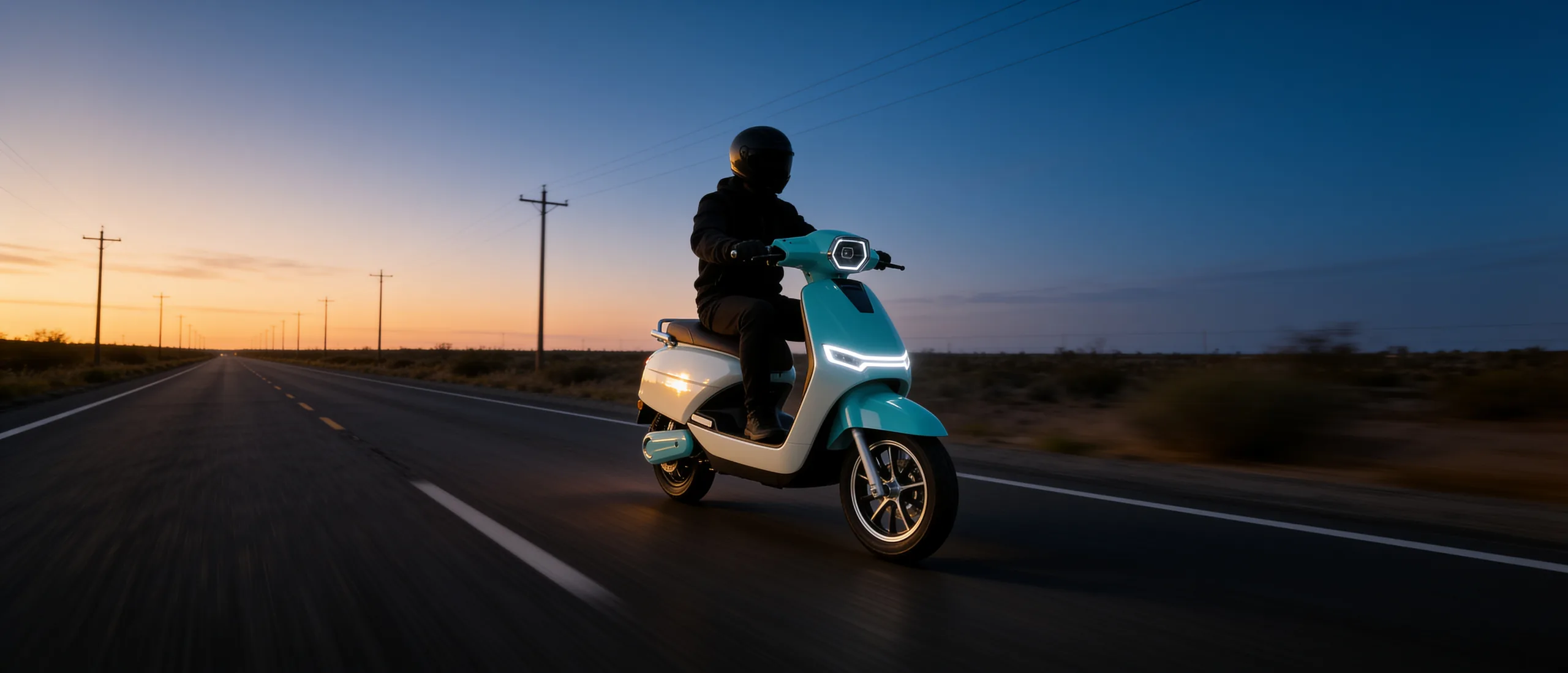
Top speed is the easiest number to print and the hardest one to earn. On the MERCURY DLX GOLD it reads fifty-five kilometres per hour. Here is everything that number is standing on.
A scooter does not have a top speed so much as it has a truce — between what the motor can pull, what the pack can give, and what the frame is willing to do about it. Break the truce anywhere and the number on the dial becomes a number on a brochure.
The pack sets the ceiling
The DLX GOLD runs a water-proof lithium-ion pack, and the first thing that pack does is set a ceiling. Voltage is what buys you speed: raise the voltage the motor is fed and you raise the electrical ceiling before the motor has done any work at all. The EZ HIGHSPEED makes the same trade at a different setting — its NMC pack is specified across 72, 60 and 48 volts and it tops out at 45 to 55 km/h. Same physics, different bracket, and each one honest about which bracket it is in.
- Battery
- Lithium-ion, water-proof, 3-year warranty
- Top speed
- 55 km/h
- Range
- 140 km+ per charge
- Charging time
- 4–5 hours
- Kerb weight
- 107 kg
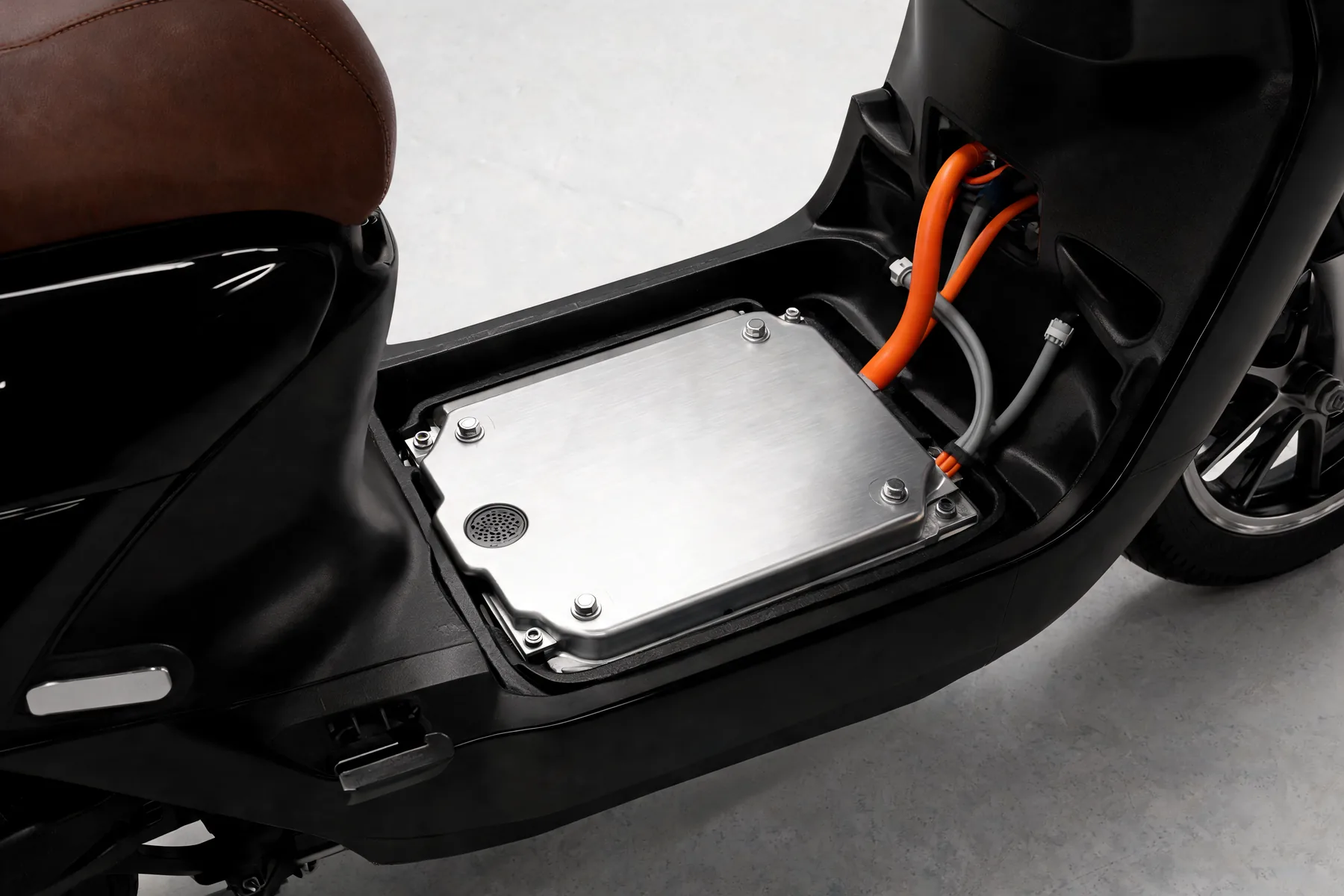
Voltage buys you speed. Amp-hours buy you the afternoon. You are always spending one to keep the other.
Why the motor is not the limit
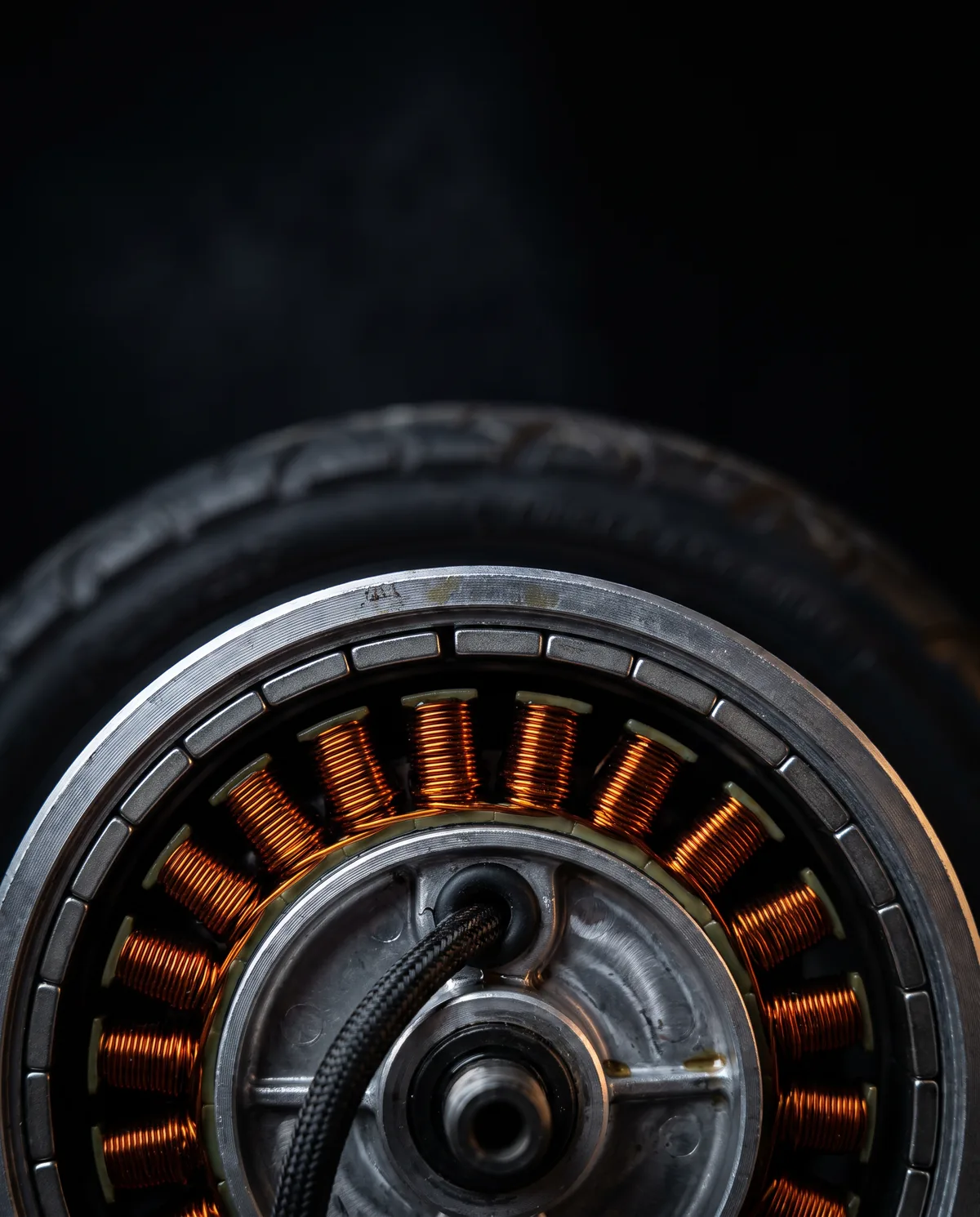
The GOLD and the DLX (LS) share a hub-motor architecture. People notice that and ask why one does 65 km/h and the other does 55. The answer is that a motor rating is a thermal promise, not a performance one. It describes what the motor will do continuously without cooking itself. What it delivers at any given moment depends on the voltage it is being fed, how it is geared, and how long you are asking.
The DLX (LS) spends its ceiling on speed and tops out at 65. The GOLD spends it somewhere else. Held at 55, the same motor sits in the easy part of its curve rather than the expensive end of it, and the energy that would have gone into the last ten kilometres per hour goes into distance instead — which is where the GOLD ends up ahead.
And why the brakes are discs at both ends
The DLX GOLD runs a 240 mm disc at the front and a 240 mm disc at the rear. Putting the same size at both ends is the part people query — the front does most of the work on any two-wheeler, so the rear looks over-specified.
It is a duty-cycle argument. A 107 kg scooter carrying two people, at a gross weight of 257 kg, spends its life in dense traffic doing many small stops rather than a few violent ones. The rear disc is not there for stopping distance; it is there so the rear is doing enough of the work that the front is not the only thing being asked, and so neither end changes character when the pads are wet or worn.
Suspension is monoshock at the front and a coiled spring absorber at the rear, on a 1350 mm wheelbase — short enough to turn inside a lane, long enough to stay calm at the top of the range. Ground clearance is 215 mm, which is the number that matters more often than the brakes do.
The number you should actually care about
Fifty-five is the headline. One hundred and forty is the story. That is the range figure, and it is the one that decides whether the machine fits your life. You will spend a few minutes a week at top speed and several hours a week thinking about how far you can go before you have to plug in.