The JournalEngineering
Two Hundred And Fifteen
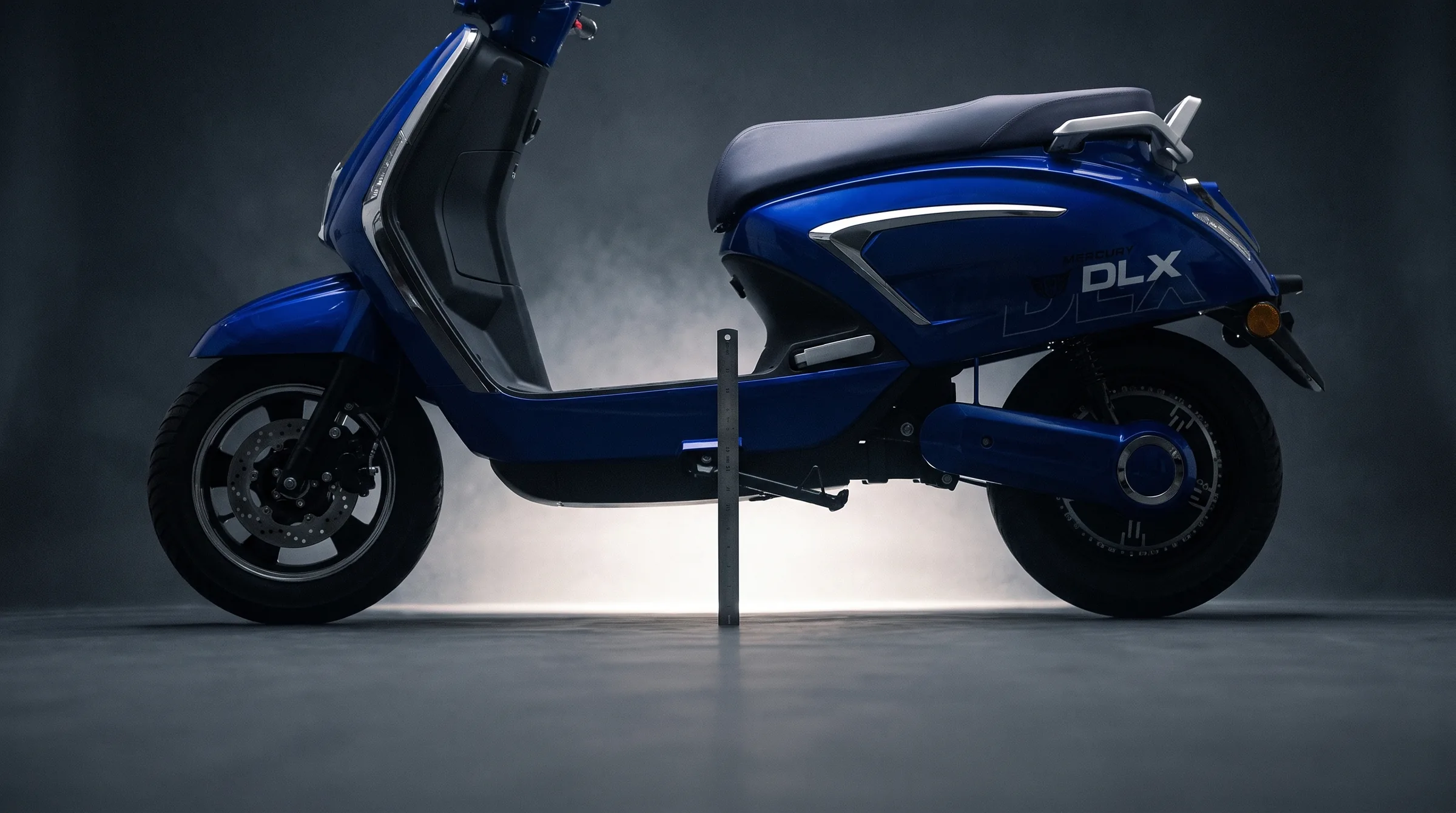
The ground clearance argument, settled with a tape measure.
The DLX GOLD sits 215 millimetres off the road. The EZ and the DLX (LS) sit at 170. All three numbers are correct.
Ground clearance is the least fashionable specification on a two-wheeler and the one most likely to end a journey. It is measured from the lowest fixed point of the vehicle to the ground, unladen — which is a detail worth holding on to, because you do not ride unladen.
Everything you add lowers it
Put a rider on the seat and the suspension compresses. Add a pillion — both machines are rated for two people — and it compresses further. The 215 millimetres on the specification sheet might be 150 in the moment that actually matters, which is the moment you meet an unmarked speed breaker in low light.
- MERCURY EZ HIGHSPEED
- 170 mm
- MERCURY DLX (LS)
- 170 mm
- MERCURY DLX GOLD
- 215 mm
Nobody has ever bought a scooter for its ground clearance. Plenty of people have replaced one because of it.
Why the GOLD sits higher
Because it is the one expected to leave the city. Its pack is physically larger than the one under a shorter-legged scooter, and a machine with 140 kilometres in hand will meet more unmarked speed breakers, more broken shoulders and more flooded approaches than one that is used for the school run. Protecting clearance on the GOLD was worth the extra seat height; on a 1350 millimetre wheelbase there was room to do it without making the vehicle awkward to put a foot down on.
The EZ and the DLX (LS) are both drawn around shorter, denser journeys, so they spend that space on a lower seat instead. Same design language, two different answers, both deliberate.