The JournalEngineering
Small Wheels, Big Decisions
Why 90/90-12, why tubeless, and what a tyre is really being asked to do.
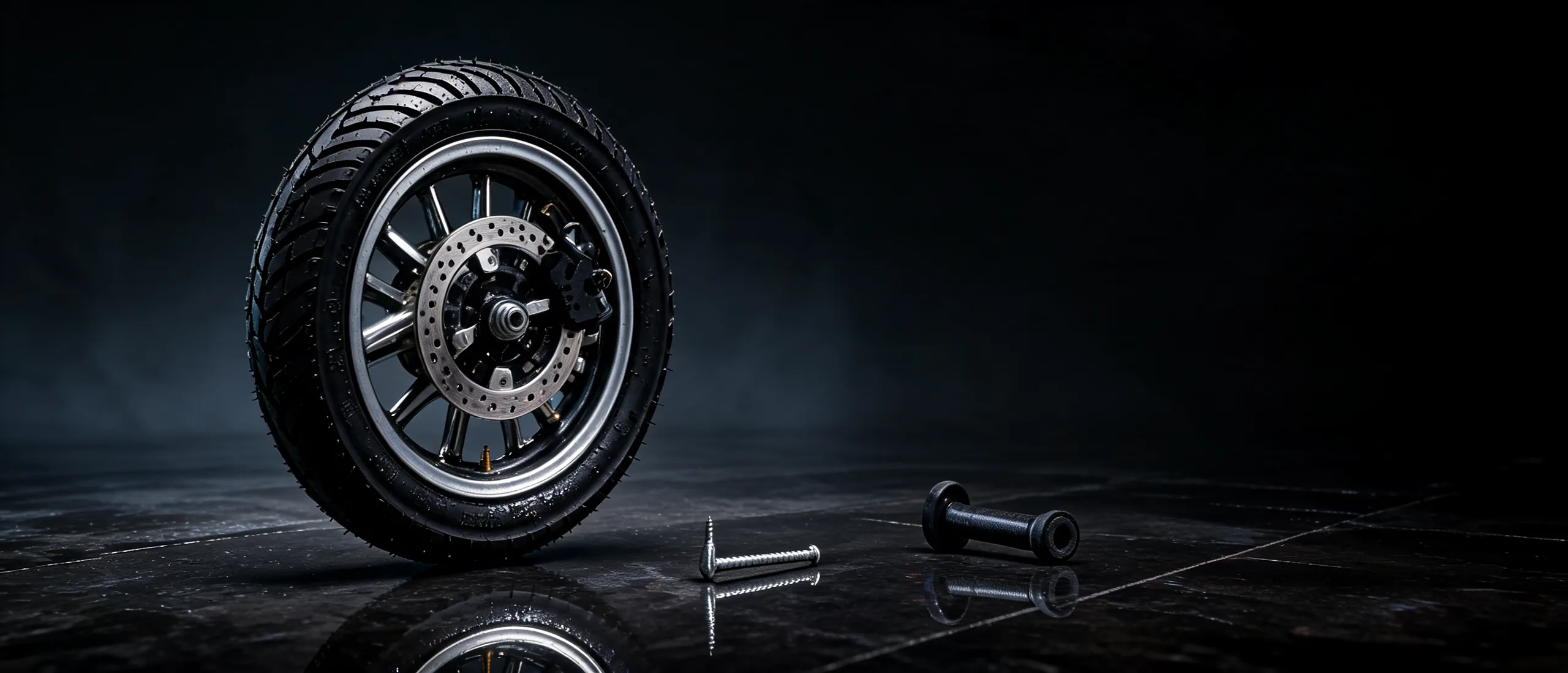
The EZ HIGHSPEED, the DLX and the DLX GOLD all run 90/90-12 at both ends. Those two digits at the end are a philosophy.
Ninety millimetres of section width, an aspect ratio of ninety percent, on a twelve-inch rim. The width and the profile are unremarkable. The wheel is where the argument is — because ten inches would have been cheaper to buy, lighter to turn and easier to package under every one of these machines.
Bigger wheels roll over things
A twelve-inch wheel meets a pothole edge at a shallower angle than a ten-inch wheel does. It climbs instead of colliding. On Indian surfaces that difference compounds — it is felt as comfort, but it is really about how much shock the fork and the rim have to absorb over a life.
It is also why we did not vary it by model. Putting a ten-inch wheel under the slowest scooter in the range would have saved something on every unit built. But a pothole does not read the badge first, and the rider least equipped to deal with one is the first-timer on the EZ HIGHSPEED. The same wheel goes on all three.
A tyre is the only part of the vehicle that touches the road. Everything else in the specification is a proposal; the tyre is the negotiation.
Tubeless, everywhere
Every tyre in this range is tubeless, and this is one of the least glamorous and most valuable decisions on the vehicle. A tube that is punctured deflates immediately. A tubeless tyre pierced by a nail usually holds pressure around the object long enough to get you somewhere useful.
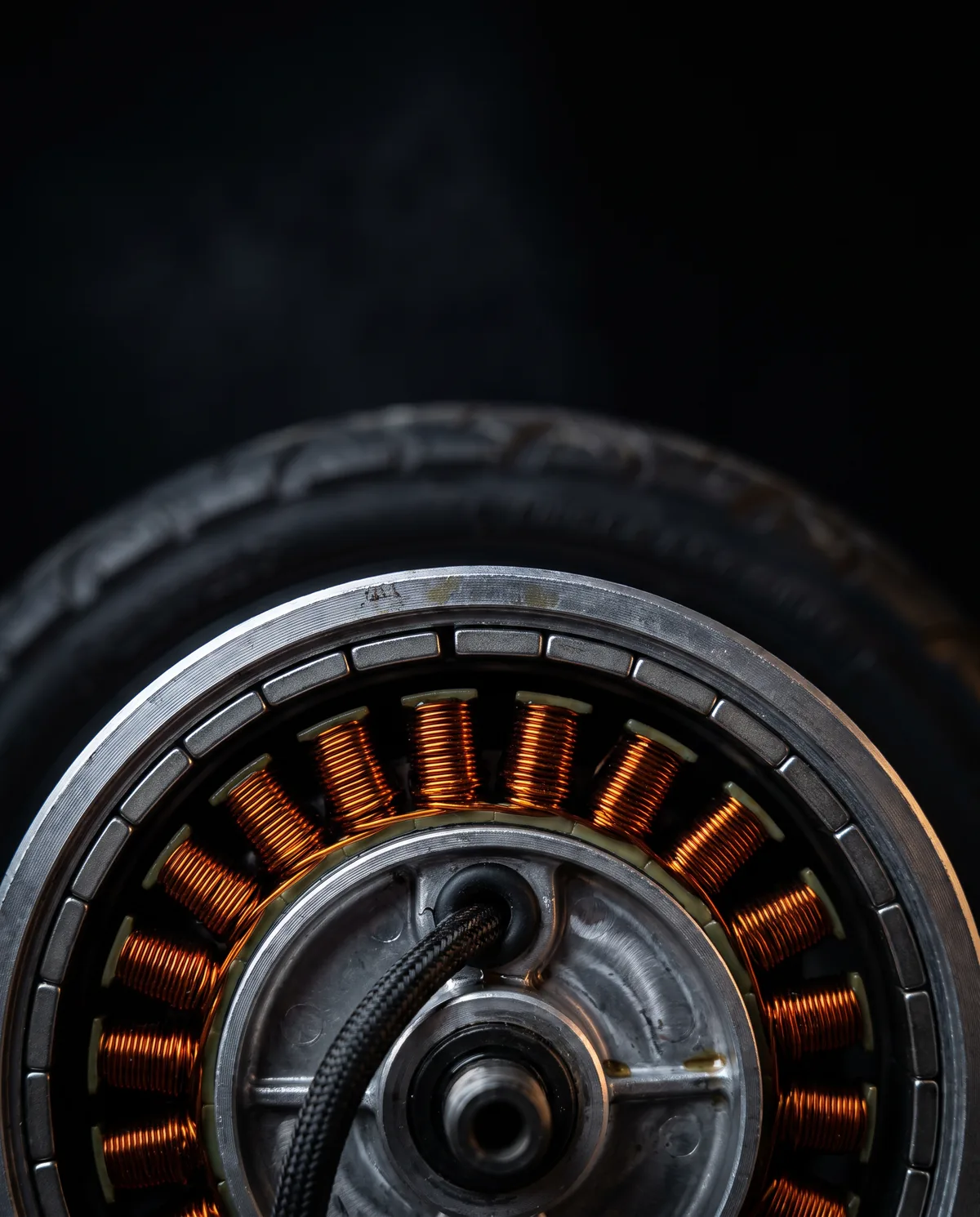
It is also repairable by the roadside without removing the wheel. On a hub-motor scooter, where the rear wheel is the motor and its cabling, that is not a small convenience.