The JournalDesign
Drawing The DLX
How a shape that reads as 1960s Milan ended up carrying a lithium pack.
The brief was not "make it look retro". The brief was "make it look like it has always been here".
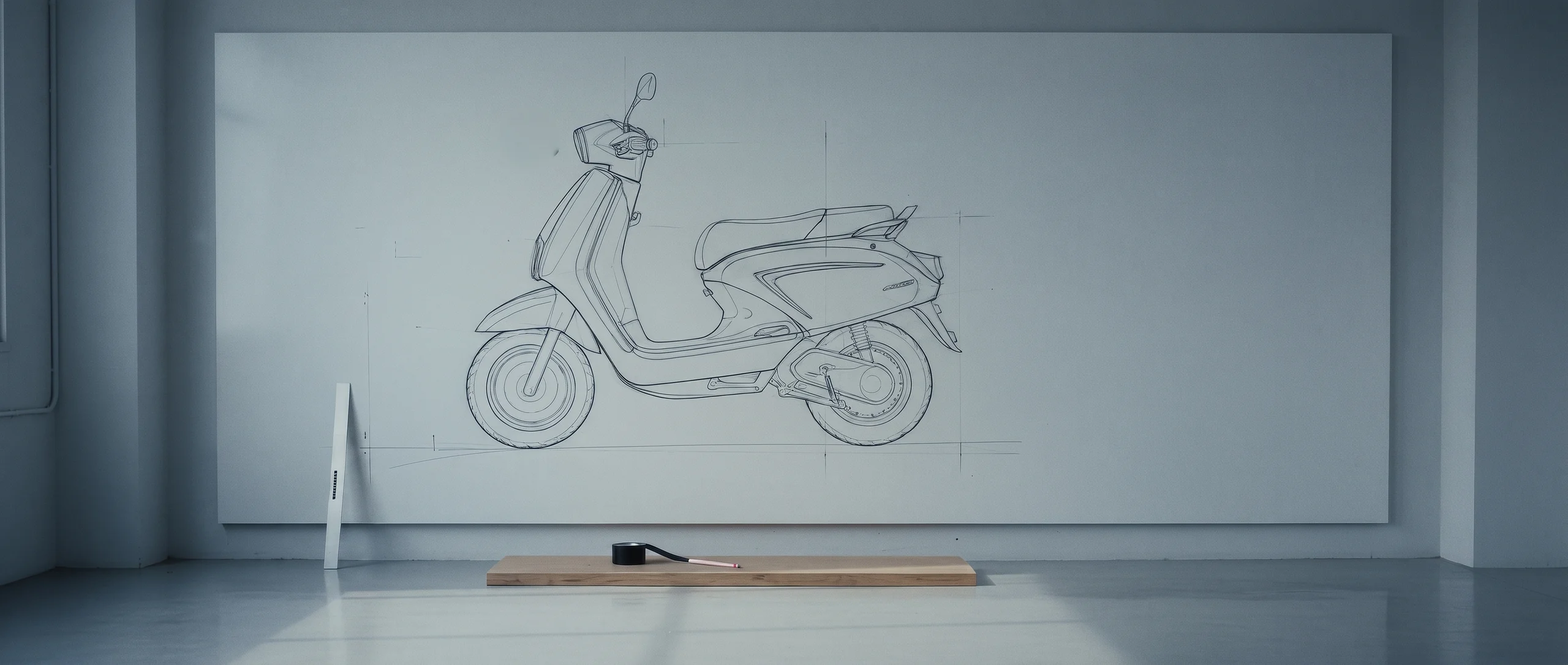
The DLX silhouette is a continuous line: a rounded front apron that rises into the leg shield, breaks at the floor, and swells again into the tail. It is a shape with a long memory. It is also, structurally, an extremely convenient box in which to put a battery.
The flat floor is the design
Everything follows from the decision to keep the floor flat and unbroken. On a petrol scooter that space is negotiated with an engine. On this one it is a sealed volume, and once you have it, the proportions almost draw themselves — the body can be full and rounded because there is something to fill it with.
That is where the 1900 by 795 by 1350 millimetre envelope of the DLX (LS) comes from, and the 170 millimetres of ground clearance underneath it. The clearance is not styling. It is the floor being held far enough off the road to survive the road.
Retro is a trap if you treat it as decoration. Treat it as proportion and it stops being a costume.
Chrome, used once
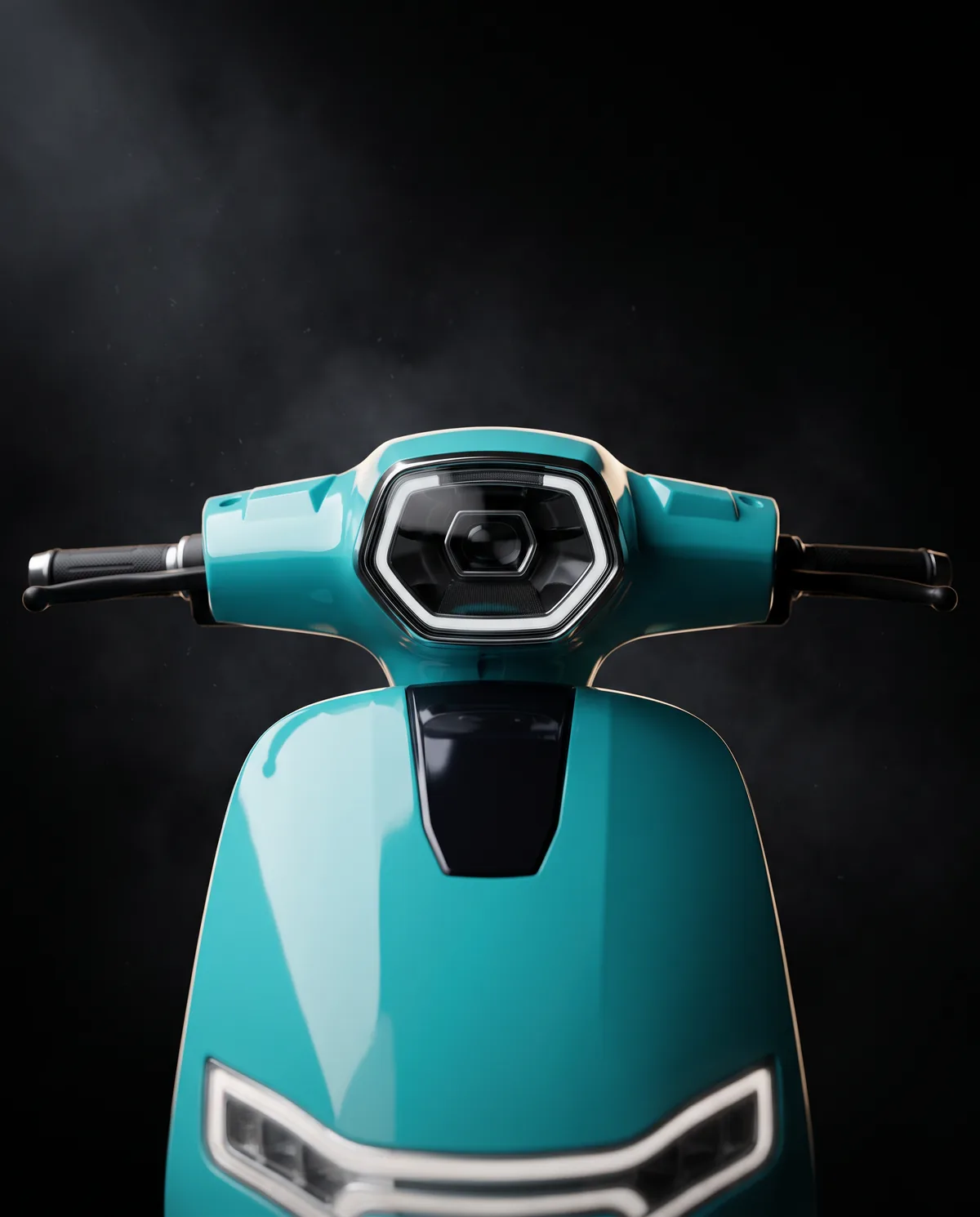
There is a single chrome strip along the flank and a chrome bezel around the headlamp. That is the entire budget, and spending it in two places is what keeps the machine from tipping into pastiche. Everything else — the lighting, the indicators, the instrument face — is unapologetically current.
The lamp itself is the tell. It sits high on the handlebar stem where a round lamp has always sat, but the aperture is a hexagon and the ring around it is LED. Full LED headlight, taillight, DRL and indicators throughout. Nothing about the light output is nostalgic.
Colour does the rest
The DLX is offered in five colours; the DLX GOLD in four — Pista Green, White, Chocolate and Black — of which the Pista Green has become, unexpectedly, the one people photograph. A shape this simple lives or dies on its paint.