Approachable is a design decision, not a speed limit.
The easy way to make a first vehicle unintimidating is to make it slow. We did not take it. The EZ HIGHSPEED is registered, and it does 45 to 55 kilometres per hour, because a scooter that cannot hold its own in moving traffic is not a safer scooter — it is a harder one to ride, and it puts its rider in everyone else's way on the one road they have to share. Everything that makes this machine forgiving therefore had to come from somewhere other than the speedometer.
Designing for the first-time rider
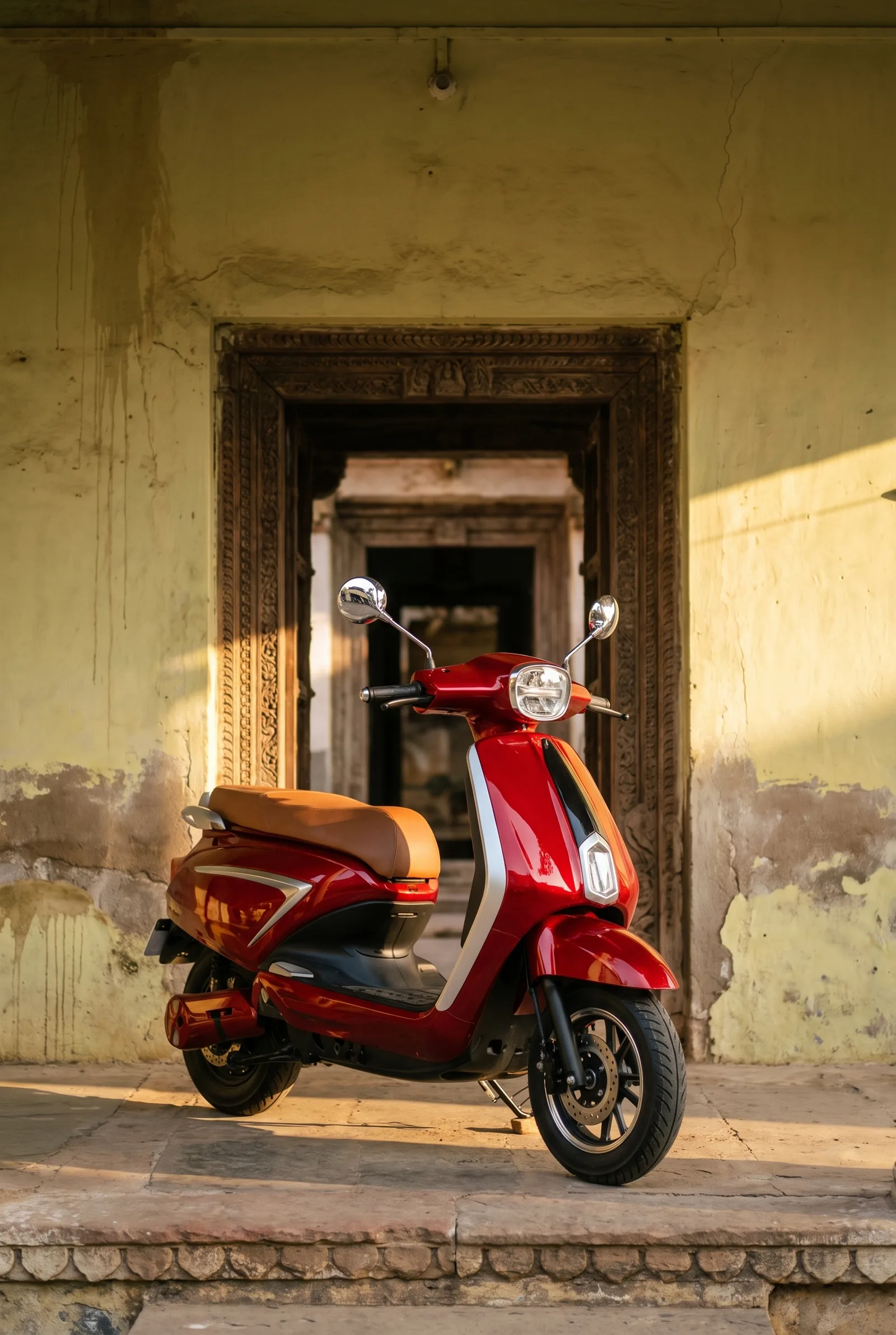
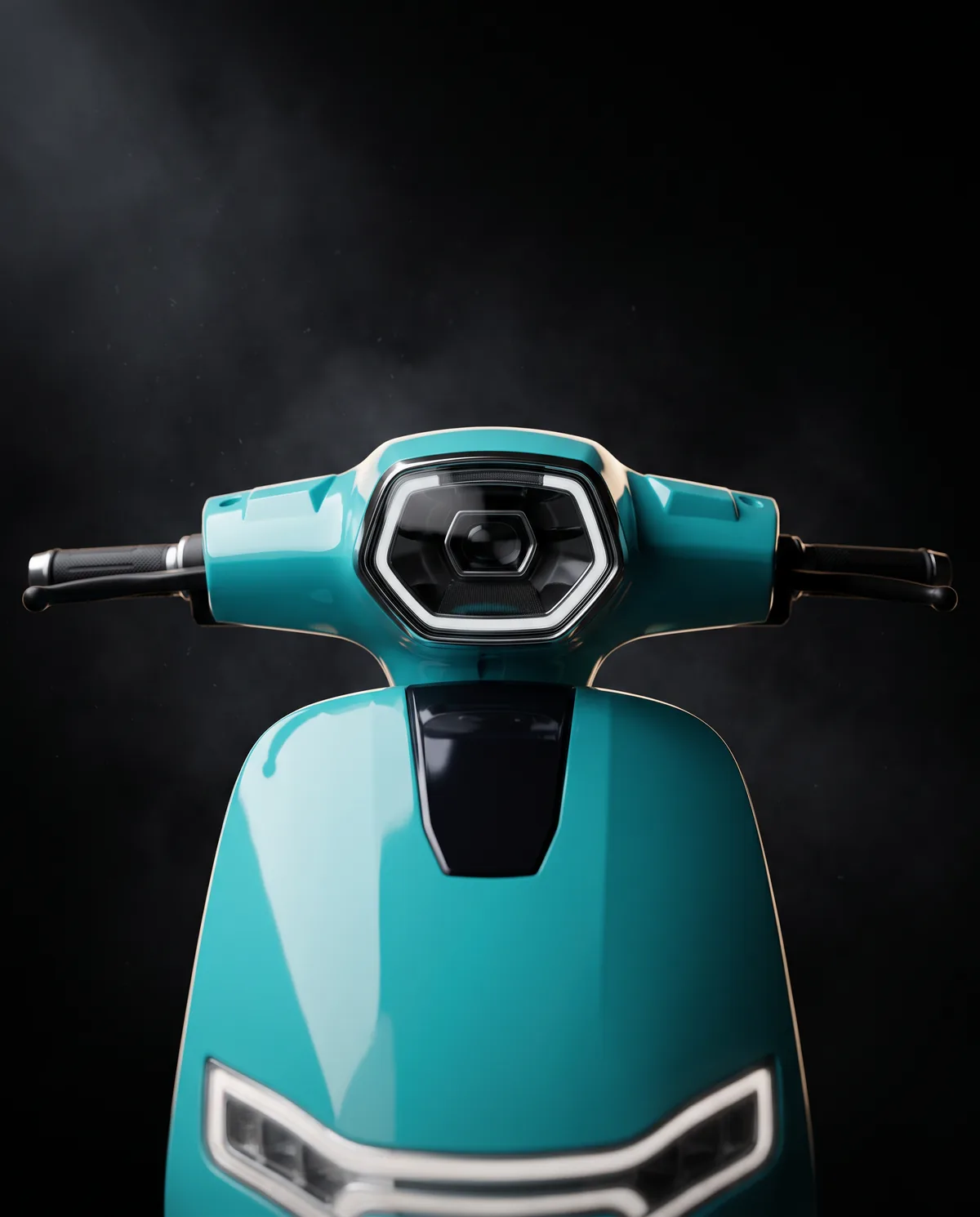
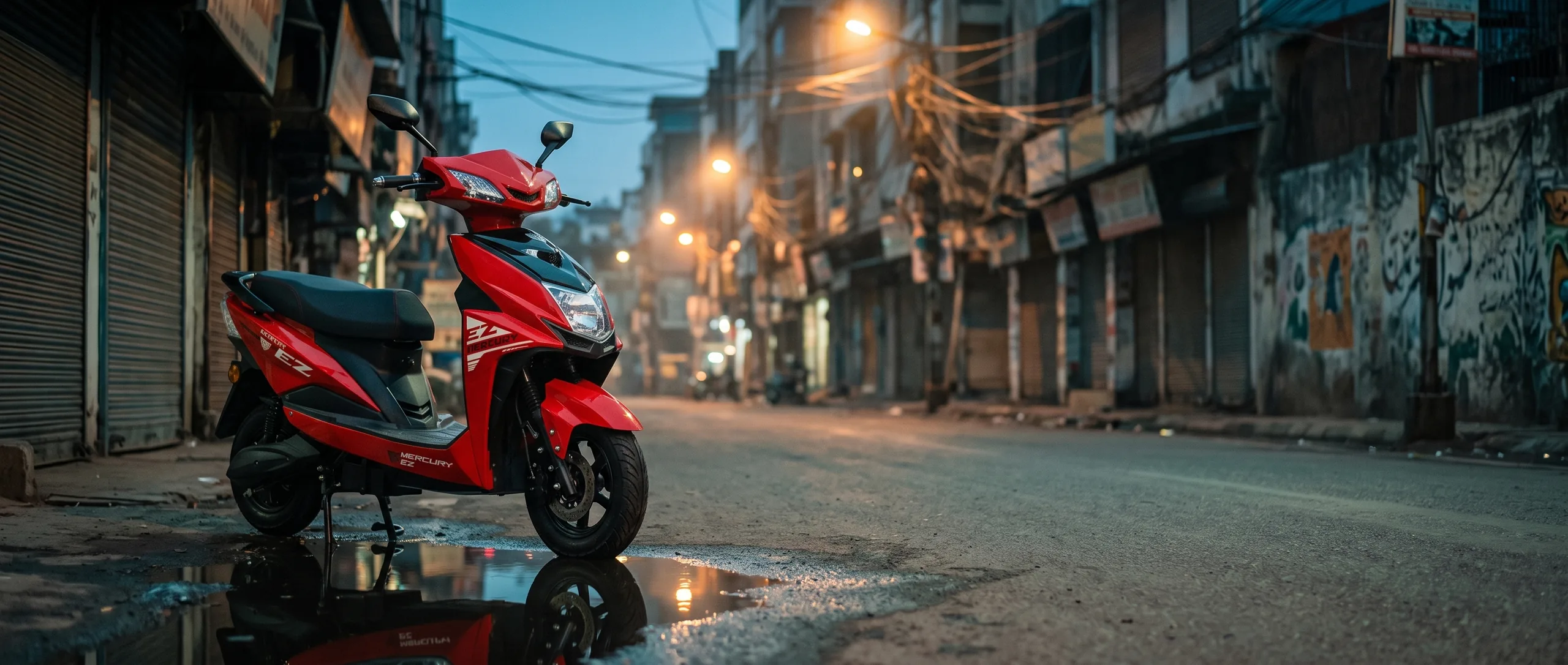
The EZ HIGHSPEED is the sporty one in the range to look at — angular fairing, lime-green accents against blue, a forward-leaning stance. That is deliberate. A vehicle aimed at people who have never ridden before should not look apologetic or medical. It should look like something you chose.
Underneath, every decision is about lowering the cost of a mistake. A 170 millimetre ground clearance and 90/90-12 tubeless tyres at both ends. Discs front and rear, hydraulic telescopic suspension at the front and a dual-tube double shocker behind — enough to stop and settle decisively without the front-wheel drama that a nervous rider can create with too much brake.
- Motor
- BLDC hub, 1.2/1.5 kW
- Battery
- NMC, 72/60/48 V, 2.5 kW
- Top speed
- 45–55 km/h
- Range
- 100–110 km per charge
- Charge time
- 3.5–4 hours
- Carrying capacity
- 170 kg, up to 2 people
A first vehicle should forgive you. Everything else it does is secondary.
Range is part of the same argument
A hundred to a hundred and ten kilometres on a charge is not on this vehicle so that anyone rides a hundred kilometres in a day. It is there so that a new owner never has to think about the number at all. Learning to ride is enough to be getting on with; doing it while also rationing the pack, planning the route around a socket and watching a gauge is how people end up leaving the scooter at home. Range, on a first vehicle, buys inattention — and inattention is the whole point.
The reverse switch
There is a reverse mode. It sounds like a novelty until you watch someone who is not confident try to back a loaded two-wheeler out of a tight parking slot on a slope. Then it stops being a novelty.
The rest of the list is in the same spirit: a USB port for a phone, a genuinely large under-seat volume, a hanging hook, an LED DRL, and a buzzer alarm. None of it is exotic. All of it gets used every single day.