The JournalEngineering
Sixty-Five On The Dial
Inside the DLX GOLD's 3.7 kilowatt-hour heart, and what it costs to hold a number.
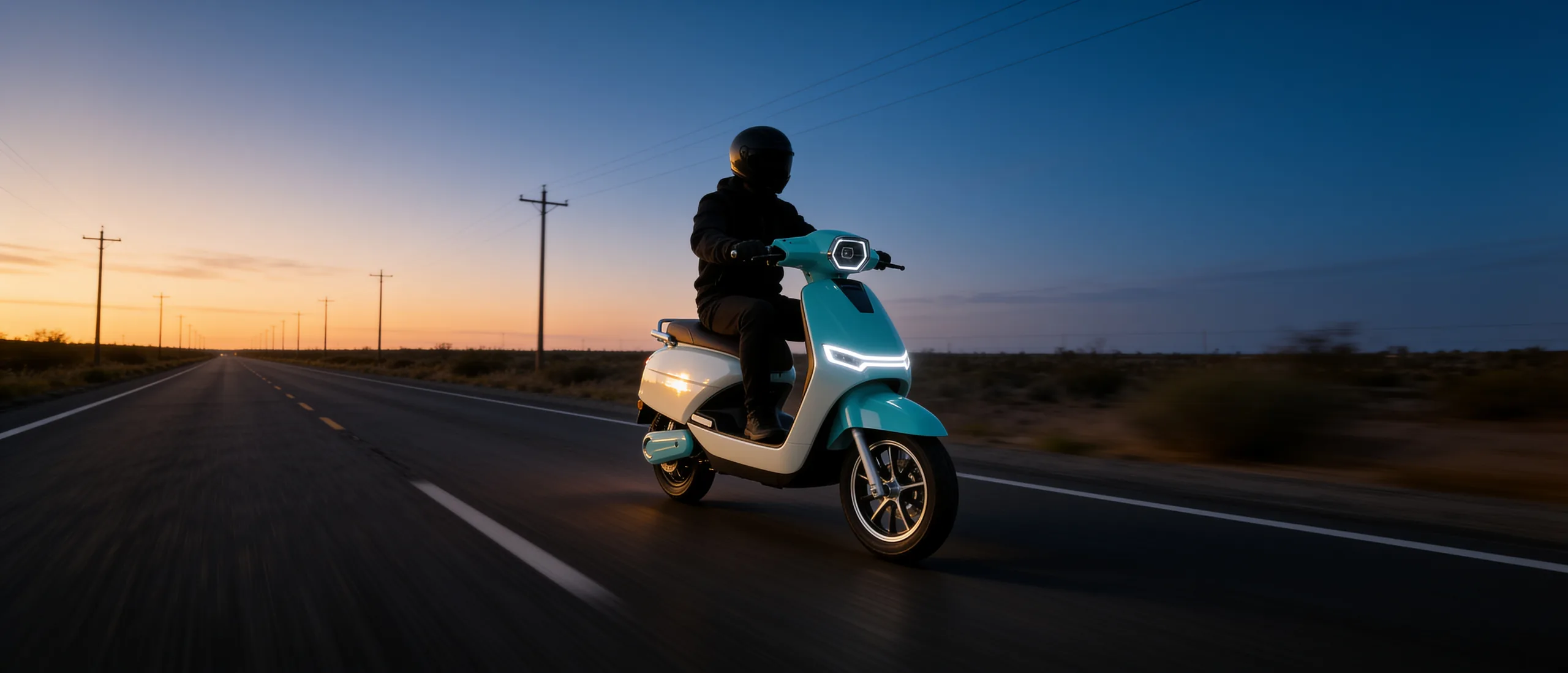
Top speed is the easiest number to print and the hardest one to earn. On the MERCURY DLX GOLD it reads sixty-five kilometres per hour. Here is everything that number is standing on.
A scooter does not have a top speed so much as it has a truce — between what the motor can pull, what the pack can give, and what the frame is willing to do about it. Break the truce anywhere and the number on the dial becomes a number on a brochure.
The pack sets the ceiling
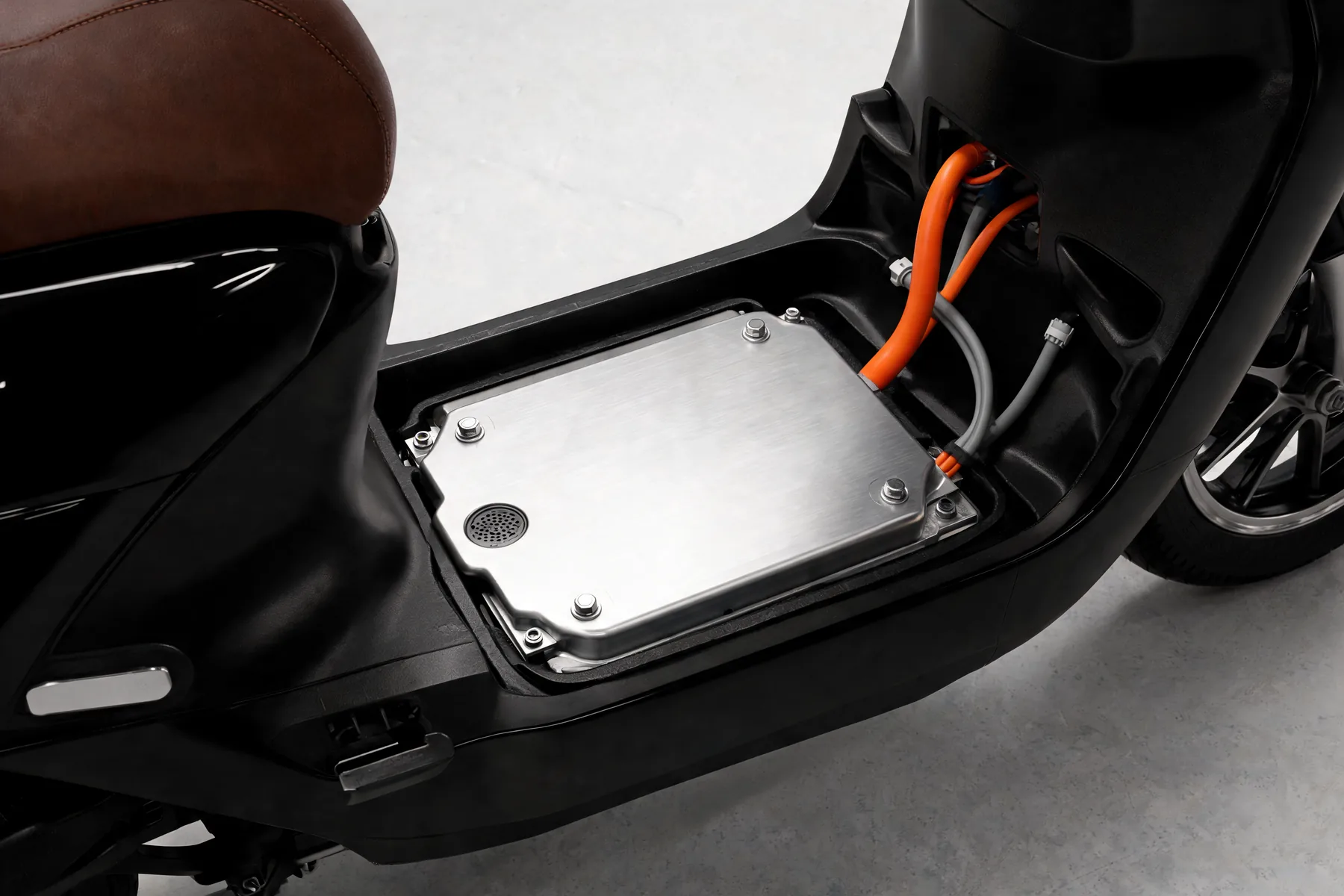
The DLX GOLD runs a 72 volt, 52 amp-hour lithium-ion NMC pack — 3.7 kilowatt-hours of usable energy. Voltage is what buys you speed. A 60 volt architecture, like the one under the EZ, is a fundamentally different conversation: it is tuned for the 25 km/h city bracket and it is honest about it. Going to 72 volts raises the electrical ceiling before the motor has done any work at all.
- Battery
- Li-ion NMC, 72V / 52AH, 3.7 kW
- Motor
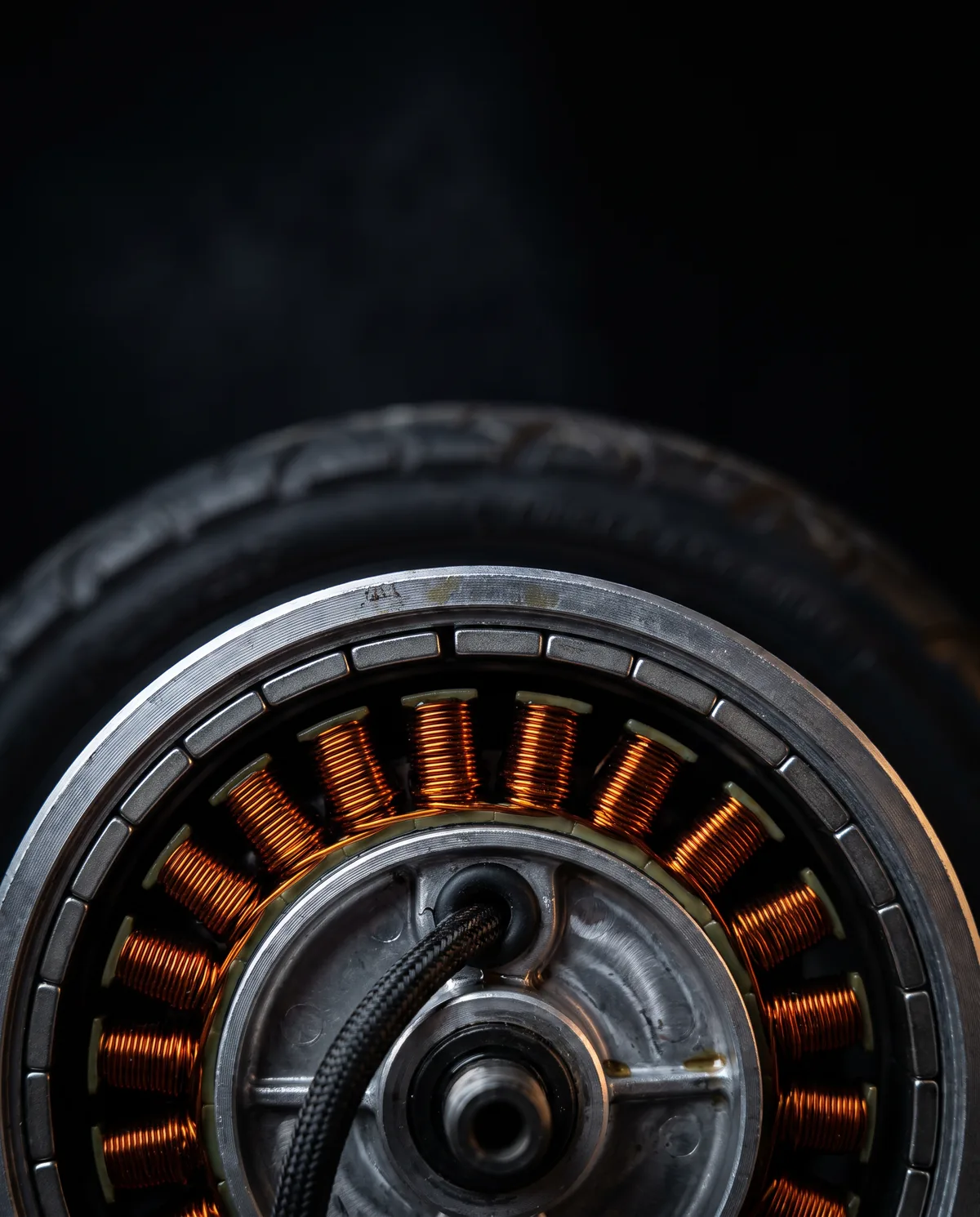
- BLDC hub, 1.5 kW
- Top speed
- 65 km/h
- Range
- 140 km per charge
- Kerb weight
- 102 kg
Voltage buys you speed. Amp-hours buy you the afternoon. You are always spending one to keep the other.
Why 1.5 kW is enough
The hub motor is rated at 1.5 kilowatts, the same figure as the DLX (LS). People read that and ask why one does 55 km/h and the other does 65. The answer is that a rating is a thermal promise, not a performance one. It describes what the motor will do continuously without cooking itself. What it delivers at any given moment depends on the voltage it is being fed and how long you are asking.
At 72 volts the same motor sits higher on its torque curve at road speed. It is not working harder for the extra ten kilometres per hour — in some respects it is working less, because it is spinning nearer the speed it wants to spin at.
And why the brakes are drums
This is the decision people argue with most. The DLX (LS) carries discs front and rear; the DLX GOLD runs drums at both ends. On a machine that is ten kilometres per hour faster, that reads backwards.
It is a duty-cycle argument. A 102 kg scooter with a gross vehicle weight of 252 kg, ridden in dense Indian traffic, does not perform the kind of repeated high-energy stops that fade a drum. What it does do is sit in monsoon water, collect road dust, and go months between services. A sealed drum is indifferent to all three. Discs are the better instrument; drums are the better tool for this particular job.
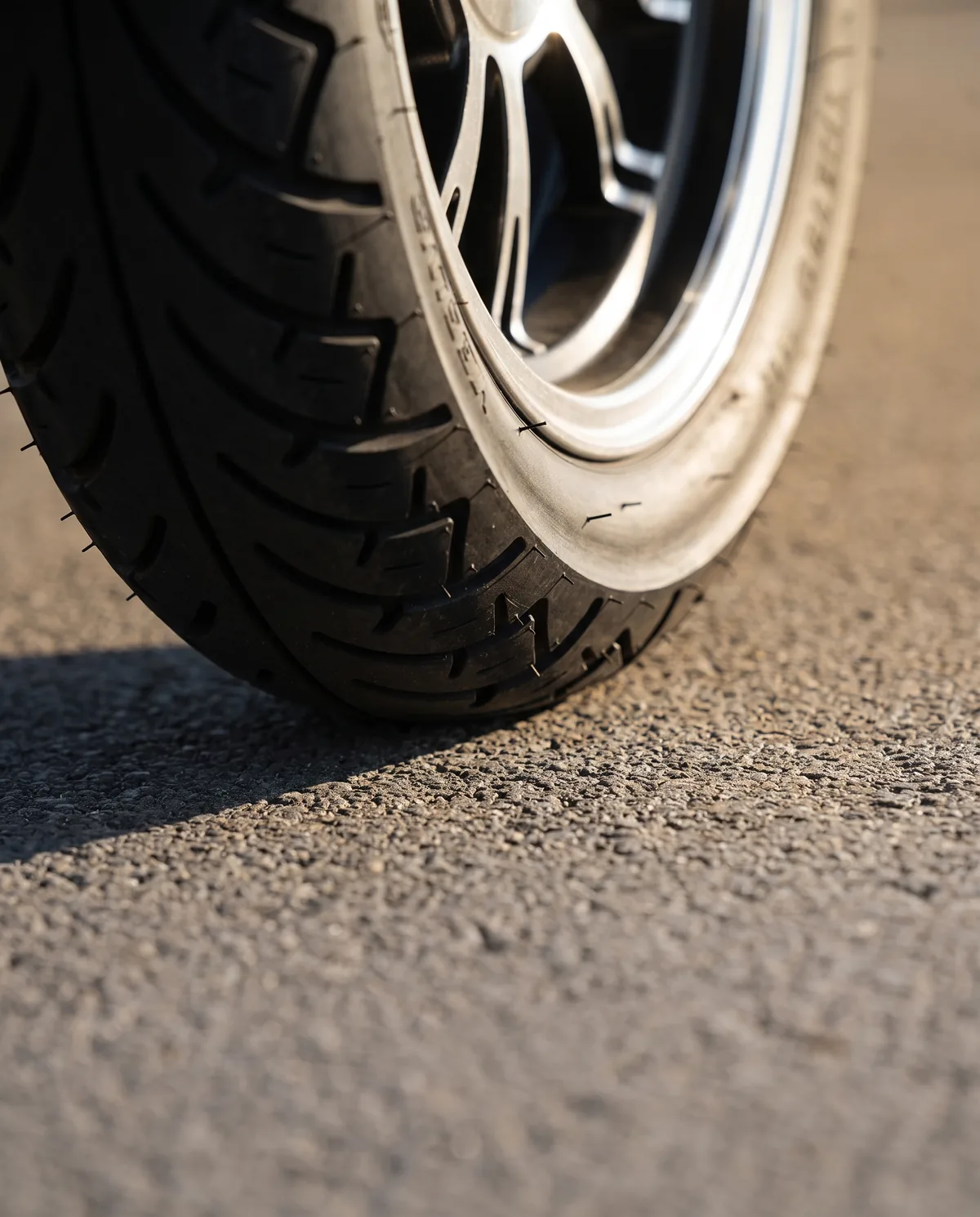
Both ends are held up by a telescopic fork at the front and a coiled spring at the rear, on a 1340 mm wheelbase — short enough to turn inside a lane, long enough to stay calm at the top of the range.
The number you should actually care about
Sixty-five is the headline. One hundred and forty is the story. That is the range figure, and it is the one that decides whether the machine fits your life. You will spend a few minutes a week at top speed and several hours a week thinking about how far you can go before you have to plug in.