The JournalEngineering
The Load-Bearing Argument
Five hundred and fifty kilograms, a flat deck, and a motor that was never going to be a hub.
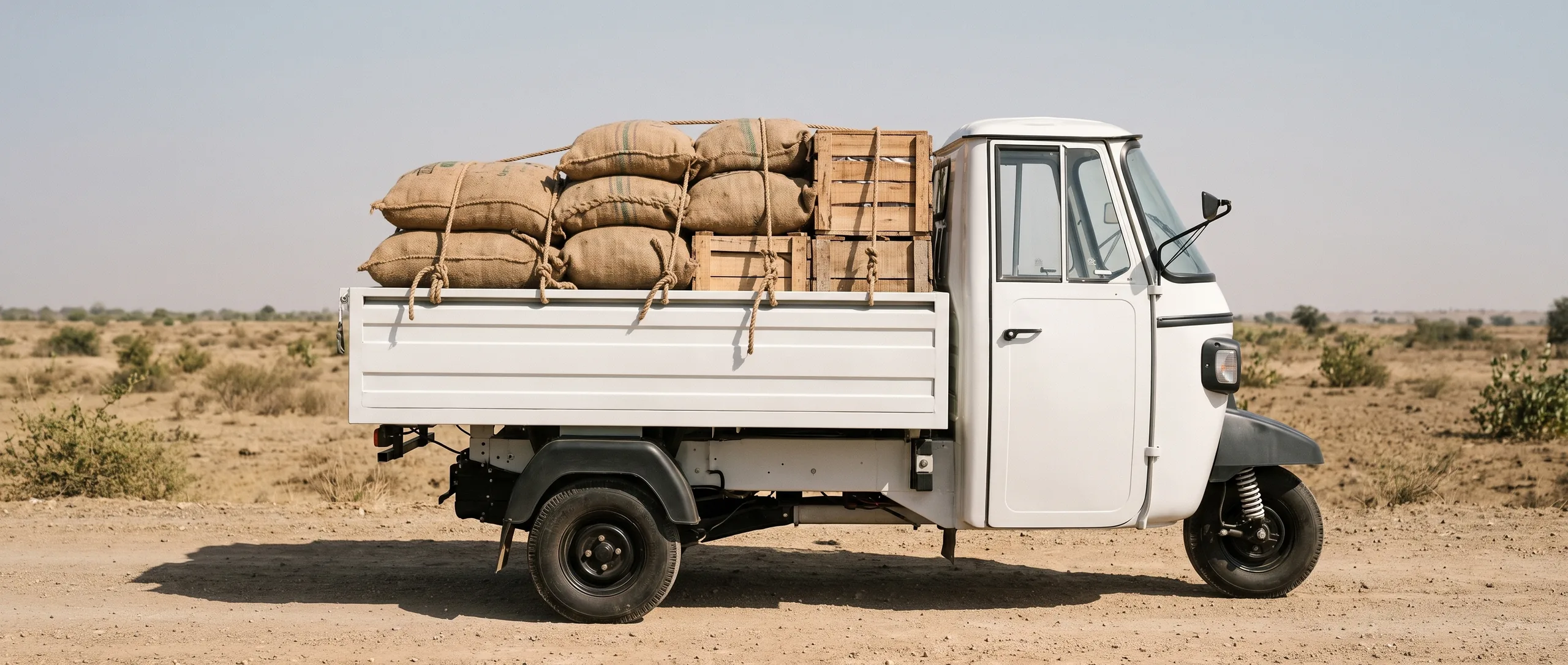
The KALA GHODA carries up to five hundred and fifty kilograms on a deck 1820 millimetres long. Almost nothing it shares with a scooter survived that requirement.
When the payload is heavier than the vehicle, every assumption changes. The motor changes, the brakes change, the tyres change, and the reason the wheelbase is 2215 millimetres instead of something convenient becomes obvious the first time you load the back.
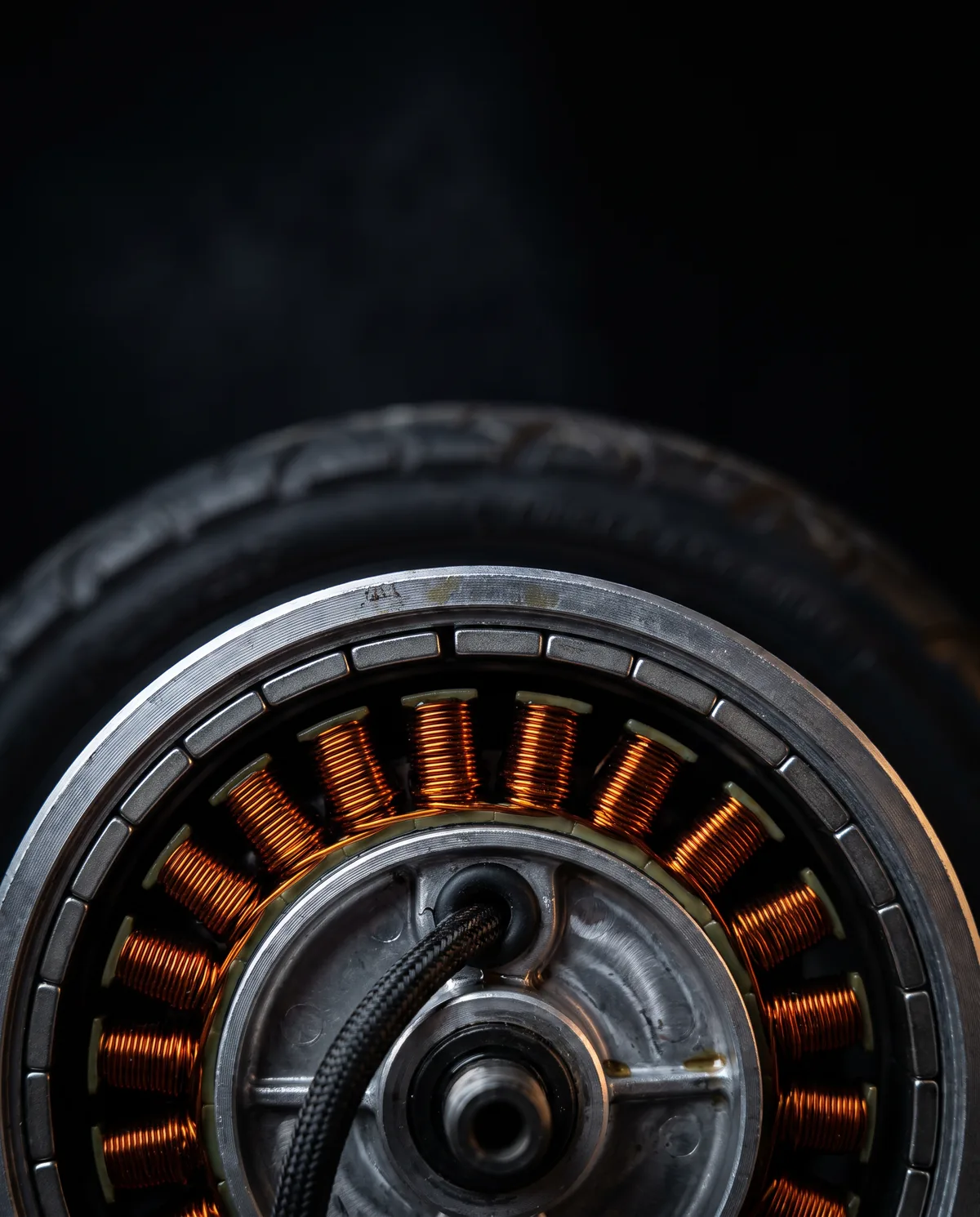
PMSM, not a hub motor
Our two-wheelers use BLDC hub motors — elegant, sealed, and geared once at the factory. That approach falls apart under load. The L5 platform uses a permanent-magnet synchronous motor instead: 60 volts, 4000 watts continuous, with a peak of 8 kilowatts when the load demands it.
A PMSM holds torque far more consistently across its speed range and tolerates being asked for a great deal of it from rest — which is exactly what a fully loaded three-wheeler does at every junction, on every gradient, all day.
- Motor
- PMSM, 60V / 4000W
- Peak power
- 8 kW
- Battery
- Li-ion, 18.2 kW
- Loading capacity
- 550 kg
- Range
- 220 km per charge
- Charging time
- 10–12 hours
- Wheelbase
- 2215 mm
- Load body
- 1820 × 1450 mm
A scooter carries a person who happens to have luggage. A loader carries the cargo, and the driver is along for the ride.
Hydraulics at all four corners
Hydraulic drum brakes front and rear, hydraulic shock absorbers front and rear. Cable-operated brakes are perfectly adequate on a 107 kilogram scooter and completely inadequate on a vehicle that may be carrying several times its own weight in steel or sacks.
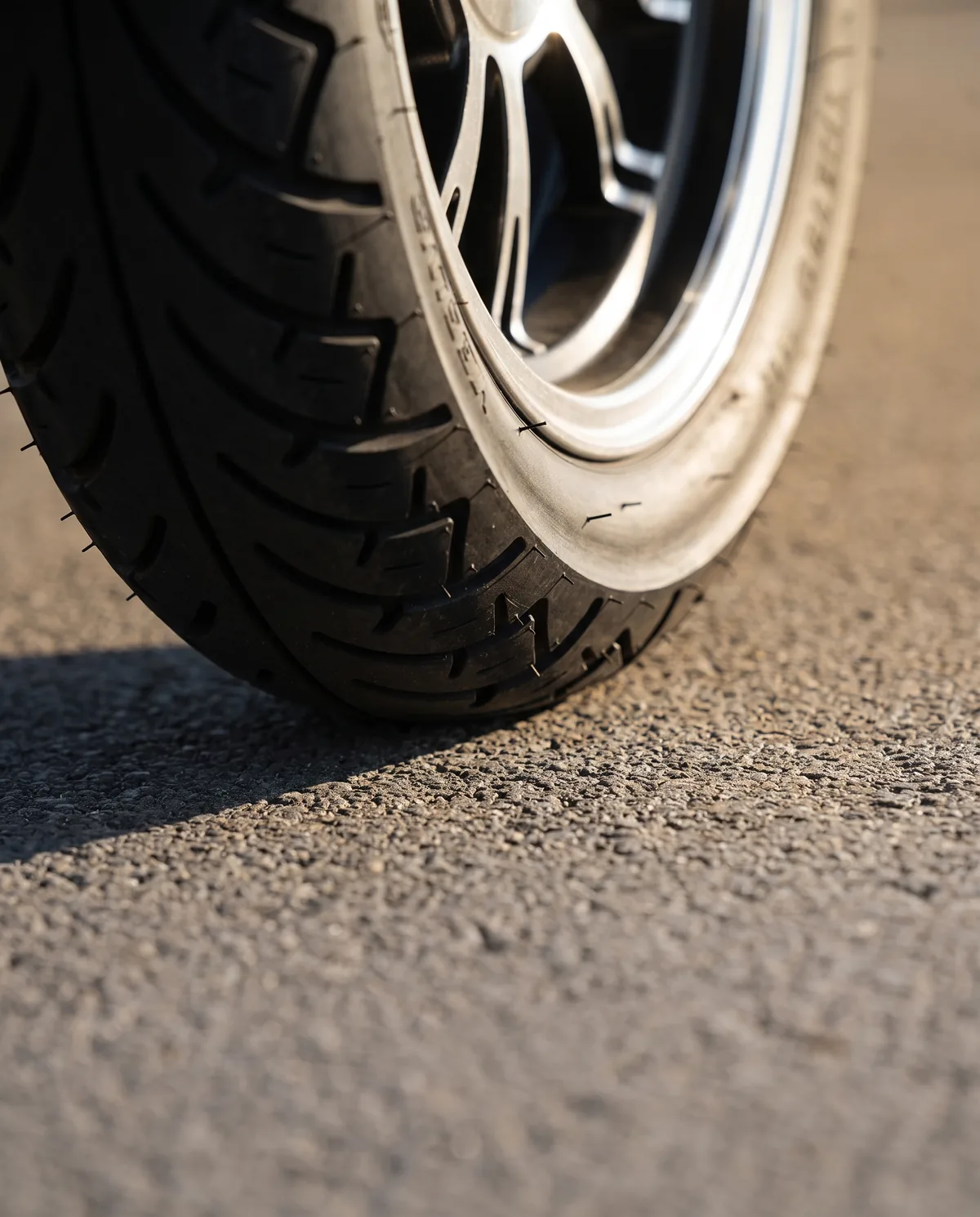
The tyres are 4.5/10 inch and tubed rather than tubeless — a deliberate reversal of the two-wheeler logic. At these loads, on these surfaces, a tubed tyre is field-repairable by any roadside shop in the country, and that matters more than sidewall convenience when the vehicle is someone's livelihood.
Not every load needs five hundred and fifty kilograms
The VOLTUS is the same argument at a smaller scale: an L3 loader with a 1.25 kilowatt motor and 350 kilograms of capacity, on 12-inch tyres and a hydraulic combo brake, running 160 to 170 kilometres on a charge that takes five to six hours.
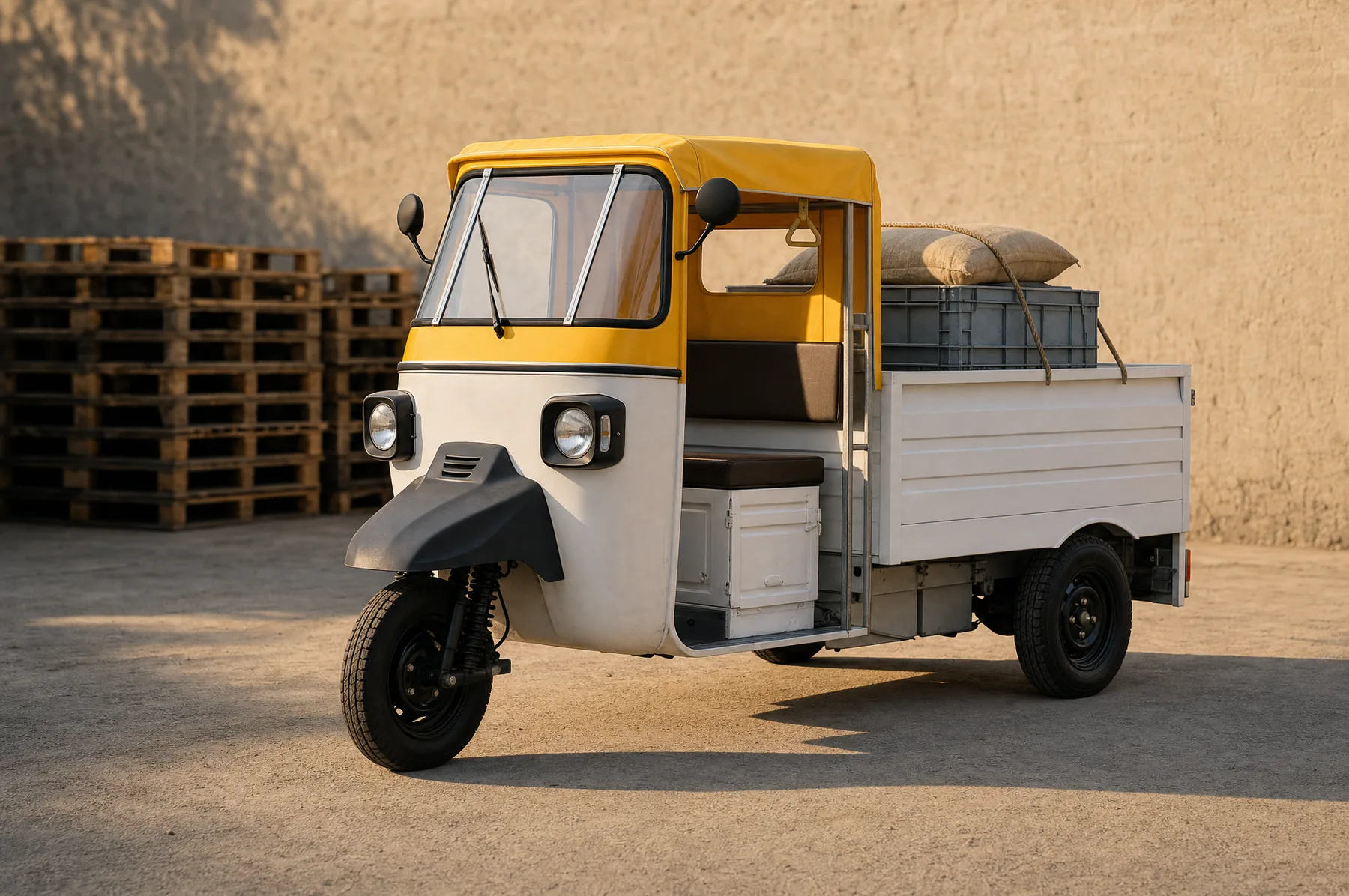
It runs lithium-ion, an automatic gearbox and a soft-top hood, which tells you exactly who it is for: an operator working a short fixed route who wants the vehicle earning on the day it arrives. It is the smaller machine in every dimension, and it turns inside spaces the KALA GHODA has to think about.
And a fire extinguisher
It ships with one, along with door locks, a stepney, parking brakes and a water bottle holder. That list is not glamorous. It is a list written by people who asked drivers what their day actually contains.