The JournalBattery & Charging
Two Chemistries, One Factory
Why the scooters get NMC and the three-wheelers get LFP, from the same building.
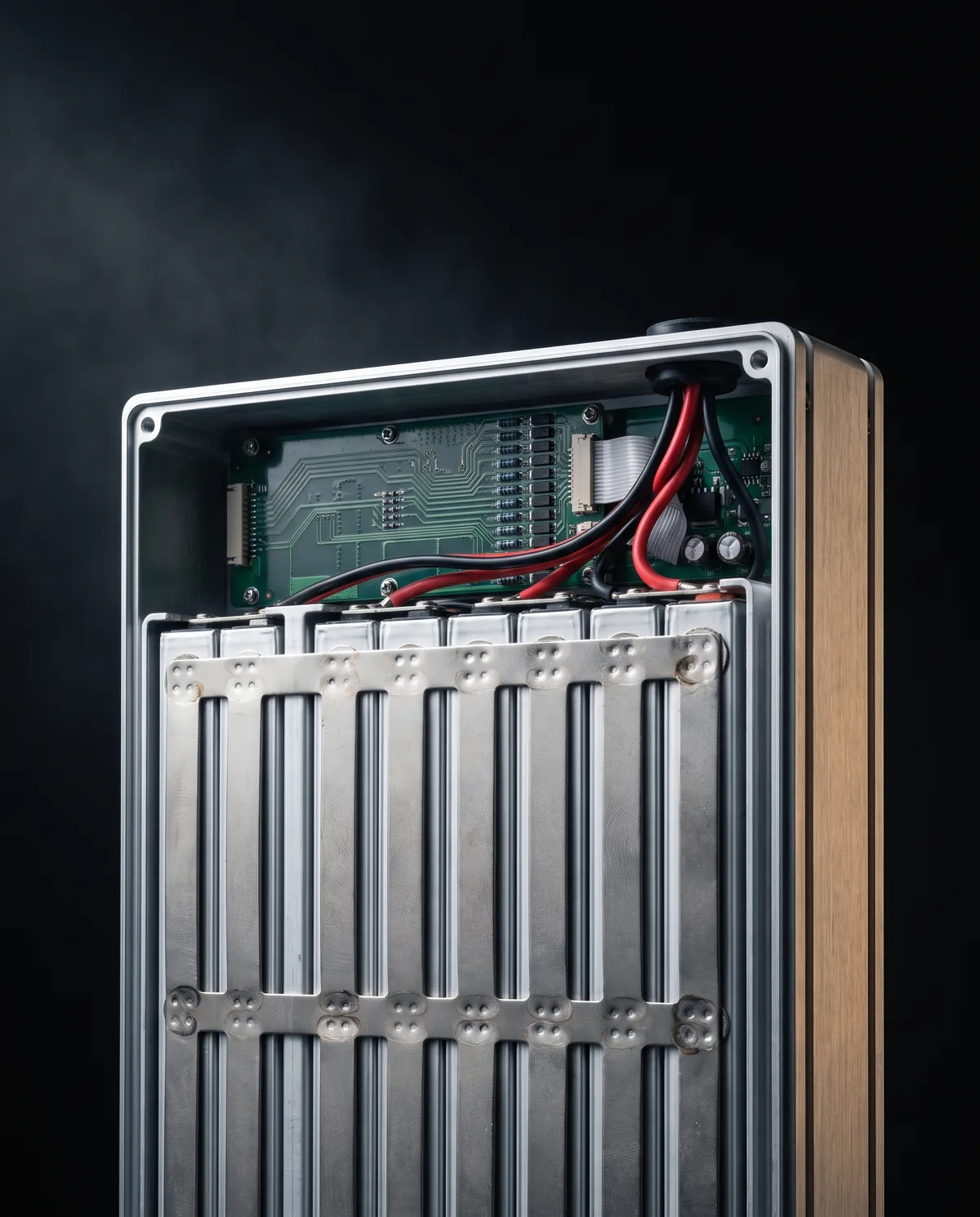
There is no best lithium chemistry. There is only the one that matches the duty cycle, and we build vehicles with two very different duty cycles.
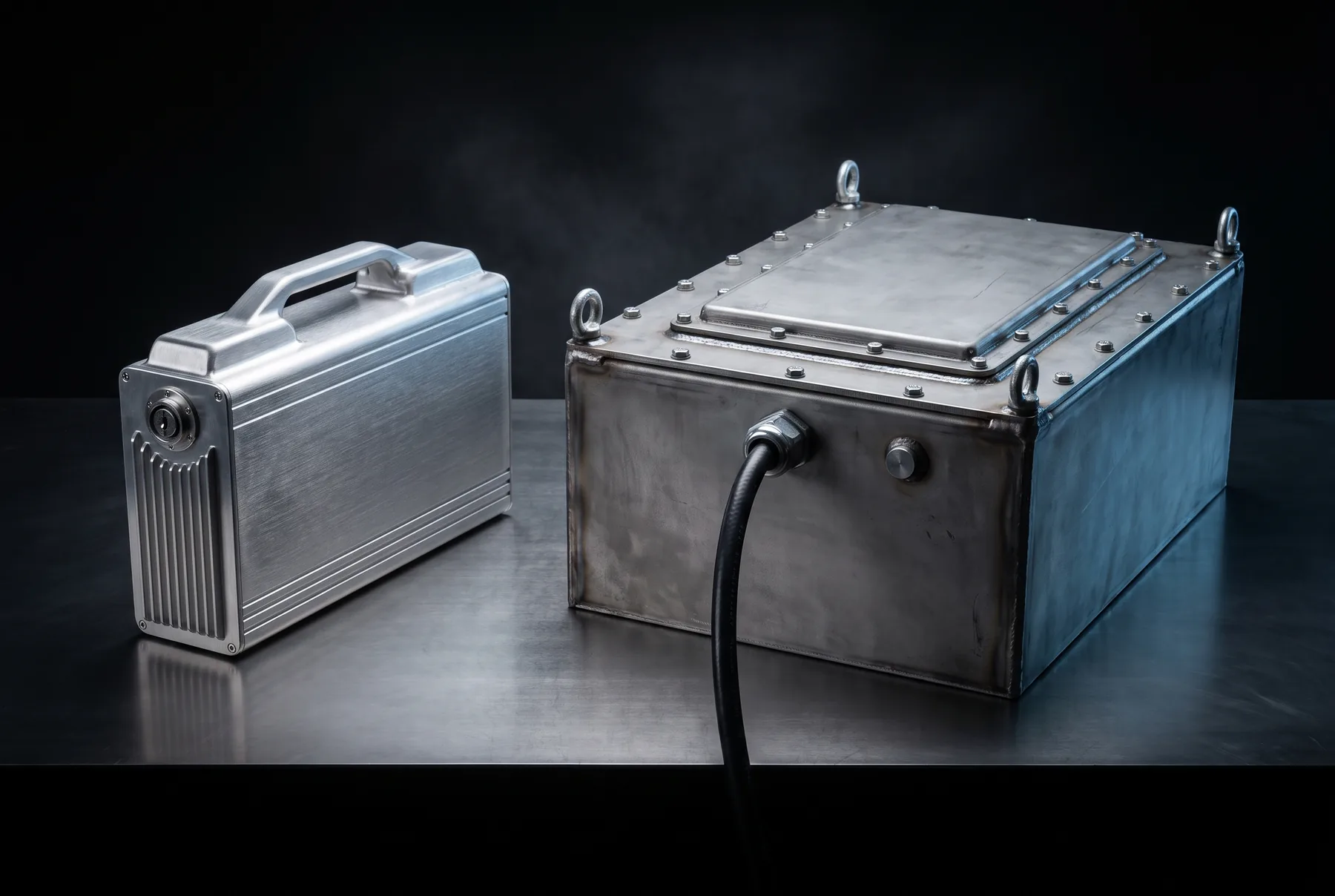
The DLX GOLD carries an NMC pack. The KALA GHODA carries 18.2 kilowatt-hours of LFP, the LIMOSA 12, and the TEJASHVI 10.2. Same factory, same week, opposite decisions.
What the scooter is optimising for
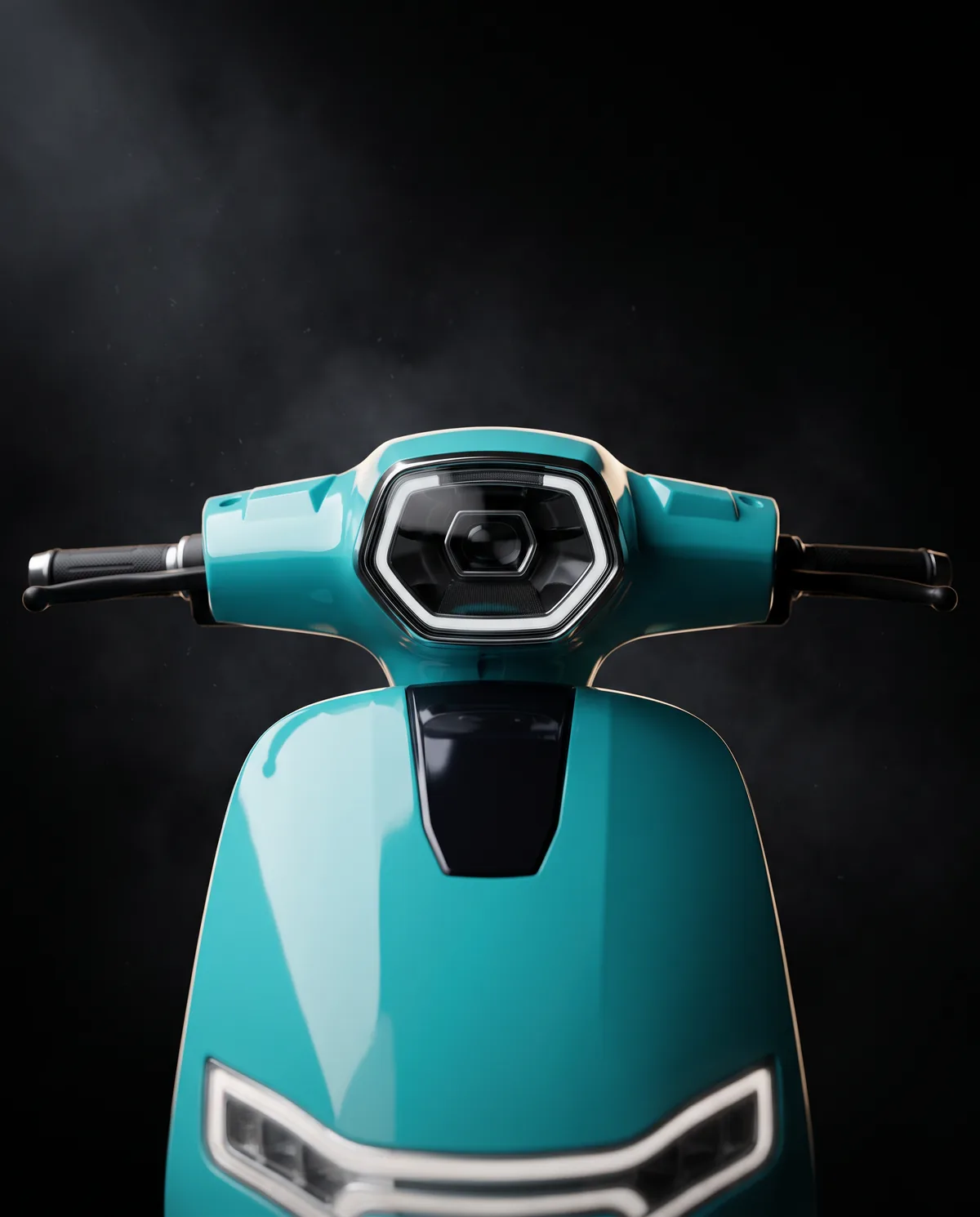
Weight. A personal two-wheeler is lifted onto its stand, wheeled through a gate, and ridden by someone who feels every kilogram in the steering. NMC — nickel manganese cobalt — packs more energy into less mass than anything else sensible at this price, and that is why a 107 kilogram scooter can claim 140 kilometres.
What the three-wheeler is optimising for
Cycles, heat and indifference. A commercial L5 is charged every single night, discharged hard every single day, parked in the sun, and expected to do it for years without anyone thinking about it. Lithium iron phosphate is the chemistry that shrugs at exactly that.
LFP gives up energy density — the pack is physically bigger and heavier for the energy it holds. On a vehicle already rated to carry 550 kilograms of someone else's cargo, that penalty is close to irrelevant. What you get in exchange is a longer cycle life and a far more forgiving thermal character.
On a scooter, mass is the enemy. On a loader, mass is Tuesday. Choose the chemistry that loses the argument you can afford to lose.
And lead acid, which we still fit
There is a third answer, and it is the least fashionable one. The TEJASHVI NEO PLUS is offered with either a lithium-ion or a lead-acid pack, on the same 48 volt, 1200 watt driveline either way. The MUSHAK GREEN is offered the same choice.
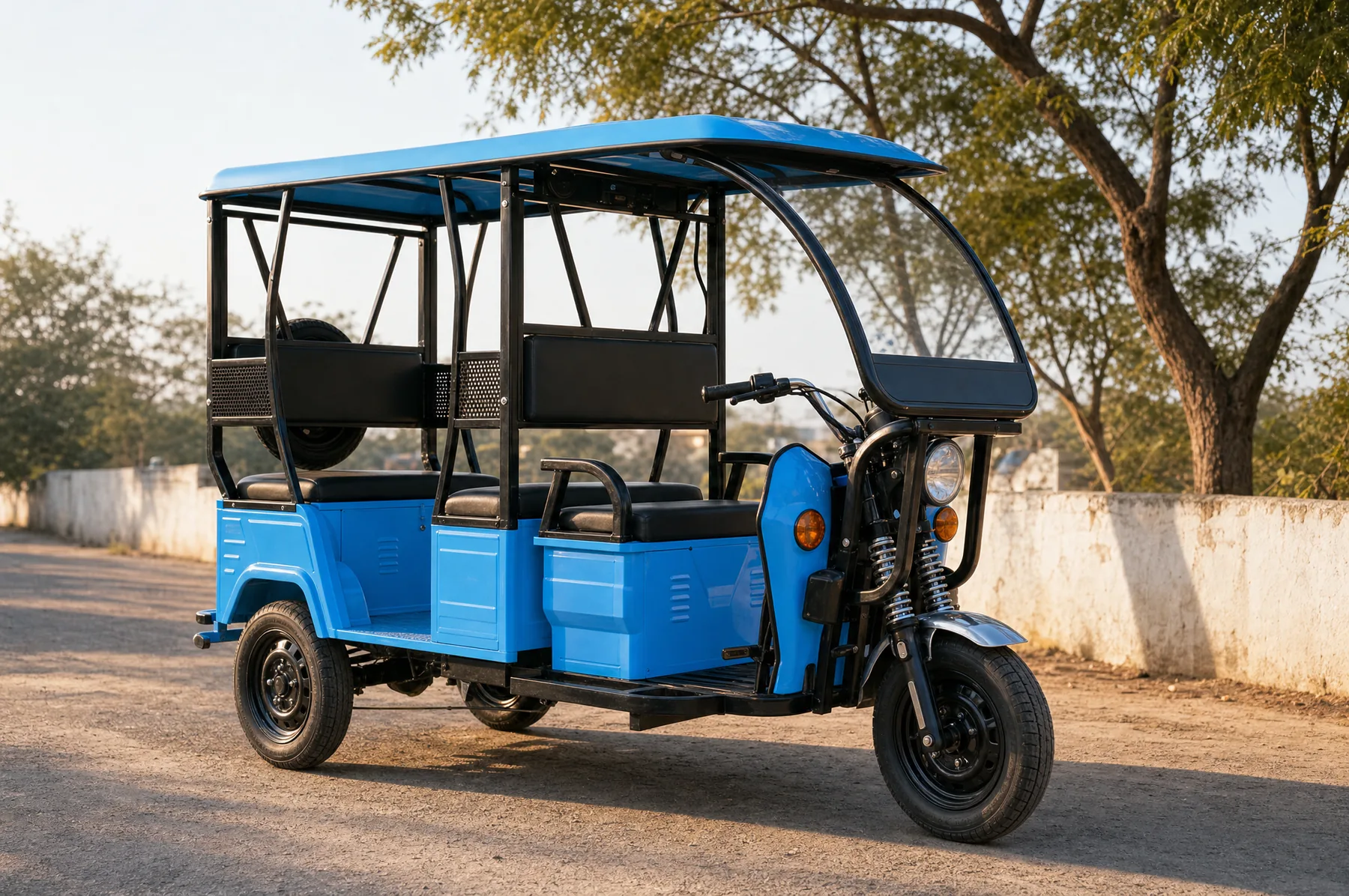
Lead acid is heavier, lasts fewer cycles and takes a worse view of being deeply discharged. It is also markedly cheaper up front, and for an operator buying their first vehicle on a tight margin, the up-front number is the one that decides whether the purchase happens at all. Pretending otherwise would not make anyone's economics work. The honest thing is to offer both and be clear about the trade.
The 18.2 kilowatt number
It is several times the energy in the DLX GOLD's pack, and it delivers 220 kilometres against the scooter's 140 — nothing like five times the distance, because it is hauling a working load rather than a rider. Range figures are only comparable between vehicles doing comparable work.
Both packs are warranted for three years. Both are built on the same line, by the same people, to the same rule: match the cells before you weld them, and test the pack before it ever meets a vehicle.